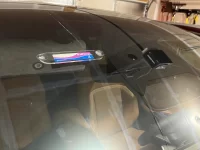
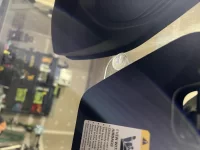
And now that my curiosity is peeked, (or peaked?), I looked into both Fastrak and E-ZPass. Quite different looking items both using RFID technology. My somewhat older NH version is a 3"x4"x3/4" plastic box with a 10 year battery, apparently. And, it "must be mounted behind and to the right of the rear view mirror on the windshield". Oops. But mine has been successfully read although they warn that the readings my be sporadic if not mounted to the windshield.

Yes, would not recommend dash mounting. EZPass, IPASS, FastTrak all use a very similar toll reading technology and the upper mount area of the windshield (where Lucid does not have specific UV shielding tech) will provide good coverage for RFID reception. Here is a good explanation of the technology:
Modern tolling systems like E-ZPass and FasTrak use Radio Frequency Identification (RFID) to automate payments. While they might look different, both the older "hard" plastic transponders and the newer "soft" stickers operate on similar principles, managed by sophisticated overhead readers.
1. The Core Technology: RFID
The system consists of two main parts: the Tag (your sticker or transponder) and the Reader (the antenna on the gantry).
* Active Transponders (Plastic Boxes): These contain a small lithium battery and a microprocessor. When you pass under a toll, the overhead antenna "wakes up" the box, which then actively broadcasts its ID back to the reader. This provides a very strong signal.
* Passive Tags (Stickers): These have no battery. Instead, they use backscatter technology. The overhead antenna blasts radio waves that are powerful enough to "energize" the tiny chip in the sticker. The sticker then reflects that energy back with its ID encoded in the signal—similar to how a mirror reflects light.
2. How the Reader Handles Both
You might wonder how one antenna can "talk" to two different types of hardware. The secret lies in Multi-Protocol Readers.
Tolling gantries are equipped with "smart" antennas that cycle through different communication protocols (languages) hundreds of times per second.
* Polling: The reader constantly sends out "interrogation" pulses.
* Detection: It listens for responses. If it hears the specific "ping" of an active E-ZPass box, it switches to the TDM (Time Division Multiplexing) protocol.
* Sticker Reading: If it detects a passive sticker, it uses the 6C (ISO 18000-63) protocol, which is the global standard for battery-free RFID.
3. Implementation: Toll Booths vs. Open Road Tolling
The physical environment changes how the read is performed, but the underlying logic is the same:
| Feature | Toll Booth (Legacy) | Open Road Tolling (Modern) |
|---|---|---|
| Speed | 5–20 mph | Highway speeds (65+ mph) |
| Detection Zone | Narrow, focused on one lane. | Wide, covering multiple lanes simultaneously. |
| Sensors | Often use "treadles" (pressure strips) to count axles. | Use overhead lasers (LiDAR) to track vehicle size and position. |
| Backup | Physical gates or lights. | High-speed cameras for License Plate Recognition (LPR) if a tag fails. |
The "Handshake" Process
When you drive through at 70 mph, the following happens in milliseconds:
* Tripping the Beam: A laser or light curtain detects a vehicle is entering the "read zone."
* The Interrogation: Overhead antennas blast RF signals across all lanes.
* The Response: Your tag (sticker or box) sends back its unique ID.
* Verification: The local lane controller checks the ID against a local "whitelist." If it's valid, the transaction is logged.
* Camera Sync: If no tag is found, the system triggers a camera to snap your license plate, which is then cross-referenced with your account or used to mail you a bill.
(Credit Gemini)