Vehicle to Home

It’s delayed because of regulations. The technology is mature but the electric companies don’t want to lose their profits. V2H makes it possible to charge your EV when prices are low and sell back to the grid when prices are high (but it’s not good for your car battery to do this - use V2H only for emergencies).

Just look at the effect of NEM 3.0 for solar in California. Excess solar is sold to PG&E who then turns around and sells it to someone else for 10x what they pay you. And, no, this doesn’t cover transmission line costs. That’s a separate line item that is charged.

I’m still debating what to do with my excess solar. Is it worth it for me to earn $1 to $2 per day when PG&E sells that energy to someone else for $10 - $20 by using my solar panels that I paid for? I have friends that have decided not to sell to the grid and just “waste” the excess solar.

The best strategy for NEM 3.0 is to be completely off the grid.

Yep. NEM 3 essentially slowed all new residential solar installation to a trickle. It was a shameful collusion between the CPUC, politicians and private utility companies. In addition, the new fees for residential solar generators combined with the attempt to roll back the 20 year time frame of the previous NEM contracts show that the consumer is once again being fleeced to increase utility profits. Mind boggling since California per kW charges are already among (if not) the highest in the nation...
 
In California at least, V2H/V2G using cars will likely have to abide by rules similar to hardwired home batteries: they must be configured as import-only or export-only.

Import-only means that if you can charge your home battery or car battery using grid power, you can't export that energy to the grid. You can only use it to power your home (V2H).

Export-only means that you can't charge your home batteries (or your car!) from the grid, only from excess solar PV generation. Then you can export power any time you like. System software generally manages this automatically, only exporting an amount of energy that it guesses you won't need, or all the energy it can if exported energy prices are higher than imported energy prices, which happens at certain hours for a few summer months.

All home energy storage systems in California are required to behave this way by the CPUC and utility as a condition for them to be connected to the grid. Tesla is a bit nonchalant about this, as they leave it up to the end user to comply with the energy storage connection agreement you have to sign. Because Tesla. Other home energy storage system providers strictly enforce the rule in their system software.

Because you want to be able to charge your EV from the grid, it must import energy from the grid and hence be treated as an import-only battery.

V2G capability will allow exporting vehicle battery energy only at the discretion of your utility for load leveling or grid emergencies. In northern CA, PG&E pulls power from my export-only home batteries a few times per year as part of their Emergency Load Reduction Program. I get paid $2/ kWh for energy my system automatically exports during ELRP events.

Adding my Lucid or Volvo or Cayenne or whatever to my home for V2H/V2G won't let me perform arbitrage on hourly energy costs, nor will it allow me to export more excess PV energy in those few summer months when export rates are high. I was hoping that with V2G my system would be able to store more excess PV energy in the car for later export to the grid at a more advantageous hour. But if this was possible, I could alternatively charge the car anywhere, connect it to my home, and then export that power to the grid for more than it cost me to buy. The CPUC simply won't allow that.
 
It’s delayed because of regulations. The technology is mature but the electric companies don’t want to lose their profits. V2H makes it possible to charge your EV when prices are low and sell back to the grid when prices are high (but it’s not good for your car battery to do this - use V2H only for emergencies).

Just look at the effect of NEM 3.0 for solar in California. Excess solar is sold to PG&E who then turns around and sells it to someone else for 10x what they pay you. And, no, this doesn’t cover transmission line costs. That’s a separate line item that is charged.

I’m still debating what to do with my excess solar. Is it worth it for me to earn $1 to $2 per day when PG&E sells that energy to someone else for $10 - $20 by using my solar panels that I paid for? I have friends that have decided not to sell to the grid and just “waste” the excess solar.

The best strategy for NEM 3.0 is to be completely off the grid.
It's a shame that this functionality is getting all tangled up in regulations.

How many people waiting on this functionality actually intend to sell energy back to the grid?

I'd prefer my utility not even offer to take my excess energy. I just want full backup power integrated into my home's electrical panel without having a ICE generator in my yard.
 
In California at least, V2H/V2G using cars will likely have to abide by rules similar to hardwired home batteries: they must be configured as import-only or export-only.

Import-only means that if you can charge your home battery or car battery using grid power, you can't export that energy to the grid. You can only use it to power your home (V2H).

Export-only means that you can't charge your home batteries (or your car!) from the grid, only from excess solar PV generation. Then you can export power any time you like. System software generally manages this automatically, only exporting an amount of energy that it guesses you won't need, or all the energy it can if exported energy prices are higher than imported energy prices, which happens at certain hours for a few summer months.

All home energy storage systems in California are required to behave this way by the CPUC and utility as a condition for them to be connected to the grid. Tesla is a bit nonchalant about this, as they leave it up to the end user to comply with the energy storage connection agreement you have to sign. Because Tesla. Other home energy storage system providers strictly enforce the rule in their system software.

Because you want to be able to charge your EV from the grid, it must import energy from the grid and hence be treated as an import-only battery.

V2G capability will allow exporting vehicle battery energy only at the discretion of your utility for load leveling or grid emergencies. In northern CA, PG&E pulls power from my export-only home batteries a few times per year as part of their Emergency Load Reduction Program. I get paid $2/ kWh for energy my system automatically exports during ELRP events.

Adding my Lucid or Volvo or Cayenne or whatever to my home for V2H/V2G won't let me perform arbitrage on hourly energy costs, nor will it allow me to export more excess PV energy in those few summer months when export rates are high. I was hoping that with V2G my system would be able to store more excess PV energy in the car for later export to the grid at a more advantageous hour. But if this was possible, I could alternatively charge the car anywhere, connect it to my home, and then export that power to the grid for more than it cost me to buy. The CPUC simply won't allow that.
If you are on NEM1 or 2, it would make sense to preserve your ability to export excess electricity. But as @Saksak said, NEM3 makes little incentive to sell back your electricity. You would be better off with import only in that situation, correct? Thanks for the information @DeaneG!
 
Personally interested in how Lucids theoretical V2H over AC is capable of dealing with the normal line to line power difference that homes have. V2V is comparatively easy since they’re balanced.
 
Personally interested in how Lucids theoretical V2H over AC is capable of dealing with the normal line to line power difference that homes have. V2V is comparatively easy since they’re balanced.
Lucid's V2H solution must include a neutral-forming autotransformer, or an electronic equivalent, likely in the same cabinet that houses the transfer switch.
 
If you are on NEM1 or 2, it would make sense to preserve your ability to export excess electricity. But as @Saksak said, NEM3 makes little incentive to sell back your electricity. You would be better off with import only in that situation, correct? Thanks for the information @DeaneG!
In July, Aug, Sep the export rate approaches $1/kWh at 6pm or 7pm. A year ago, it was $2.50/kWh. Definitely worth exporting. Not doing so would be cutting off one's nose to spite the face.

One thing that NEM3 ensures - there is little payback for installing too many solar panels that generate more energy than you can consume at home. And you need enough battery to store most of that energy, as your generation curve won't match your consumption curve.
 
Last edited:
In July, Aug, Sep the export rate approaches $1/kWh at 6pm or 7pm. A year ago, it was $2.50/kWh. Definitely worth exporting. Not doing so would be cutting off one's nose to spite the face.

One thing that NEM3 ensures - […] you need enough battery to store most of that energy, […]
The export rate at $1/kWh is only during a few hours during VPP events. There have been 3 events this summer, for a total of 6 hours (2 hrs per event) where its advantageous to sell to the grid. Otherwise, sending to the grid mostly benefits the electric utility. Rates are similar to today’s prices:
  • 00:00-08:00: Buy $0.334, sell $0.072 (avg, varies)
  • 08:00-15:00: Buy $0.334, sell $0.028 (peak solar generation hours, I have seen sell prices of $0.000 on some days while buy remains the same).
  • 15:00-16:00: Buy $0.390, sell $0.033
  • 16:00-17:00: Buy $0.552, sell $0.033
  • 17:00-18:00: Buy $0.552, sell $0.051
  • 18:00-19:00: Buy $0.552, sell $0.094
  • 19:00-20:00: Buy $0.552, sell $0.119 (best rate).
Under NEM3, using or storing 100% of your solar energy and being off grid as much as possible is the best consumer course of action (i.e. getting enough home battery capacity to store all the solar energy you generate is important).

The only problem with EV is that I want to charge at night instead of the day. Under NEM3, though, it makes the most sense to charge during the day to store the excess solar in your car instead of sending it to the grid. Car batteries have a very large capacity compared to home batteries.

I’m looking into getting a charger that talks to my solar system and adjusts charge rate to siphon off excess solar for car charging.
 
The export rate at $1/kWh is only during a few hours during VPP events..
Enphase says that PG&E told them $0.82/kWh for yesterday. Rates in August top $1/kWh from PG&E's chart. I don't know why the rates that Enphase imported from PG&E for yesterday are higher than the rates in PG&E's chart. Maybe there's an adder incentive for new NEM3 customers.
PGE Export rate 19 Jul 2026.webp

PGE 2026 Export rates.webp
 
Last edited:
Enphase says that PG&E told them $0.82/kWh for yesterday. Rates in August top $1/kWh from PG&E's chart. I don't know why the rates that Enphase imported from PG&E for yesterday are higher than the rates in PG&E's chart. Maybe there's an adder incentive for new NEM3 customers.
View attachment 40038
View attachment 40039
@DeaneG I think we may be on different plans. Are you able to charge your home battery off of the grid?

I’m able to both import and export between the battery and grid. This is for storm hedge mode, which fully charges the battery from the grid for a possible power outage.

This is also why I want V2H. During extended power outages with clouds all day, I’d like to be able to drive somewhere, charge up my EV, and then transfer the power to my home battery.
 
I’m still debating what to do with my excess solar. Is it worth it for me to earn $1 to $2 per day when PG&E sells that energy to someone else for $10 - $20 by using my solar panels that I paid for? I have friends that have decided not to sell to the grid and just “waste” the excess solar.
Waste in exces solar or better ask neighbors to come charge at your house for pocket money, or kids savings etc :D
we have the same in germany, currently we received roughly 0,08€ / kwh putting into the grid.
 
Lucid vehicles have a minimum of 92 kWh of storage capacity. A Tesla powerwall 3 has a capacity of 13.5kWh. So the Lucid is the equivalent of over 6 powerwalls which would cost $55K. Someone help me here because this is a no brainer and would be a great selling point - show me my error!

Showing this math to the wife as part of my strategy to get another Air. " It's good for the environment! "
 
@DeaneG I think we may be on different plans. Are you able to charge your home battery off of the grid?...
It's very possible. I'm on E-ELEC/NEM3. NEM3 customer connection date makes a difference too - export credits are high just after connection and taper off over a few years.

My system will automatically charge off the grid during storm warnings. It's the only time an export-only system can do so. It appears that the system software is designed to not to let this previously-imported battery energy be exported back out to the grid. I tried to make it do so, but couldn't.

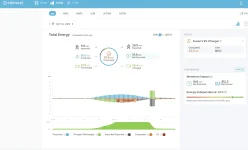
Here's a snapshot of a typical day using excess-solar EV charging, with a battery-dump export at 7pm when export rates peak. Even given that dumping my home batteries every evening in June, July, Aug, Sep, meaning that I have to import power until the next morning, I'm still coming out ahead by about $10 per day.
 

Attachments

  • Enphase charging and export.webp
    Enphase charging and export.webp
    78.7 KB · Views: 53
It is a drag when I've already charged both our EVs and I'm exporting ~9kW of PV generation at under $0.05 / kWh.
I had more solar panels installed than I really needed, because I wanted to have plenty of extra energy to charge our cars and still bake or do laundry. Under NEM3, that's financial foolery on most days.
 
At the Charlotte Owners Club Event on Saturday the question was asked something like, "After 2 years of waiting are we any closer to Lucid offering a V2H solution?" The head of software (can't remember his name) took the mic and said this was actively being worked on, so sooner rather than later. That was pretty much in line with what we heard from the Investor's Day deck.

I spoke 30 minutes or so with him. Nice guy. As cautious as any program manager I ever worked with. One interesting insight was that they may have multiple "packages" for a given software version. For instance, the Air Pures that got bricked recently received the software version everyone else did, but it was the wrong "package" for the inverter they were built with. That's why the update worked for some owners and not others. The code already existed for the affected vehicles; they were just pushed the wrong package of it for the hardware (inverter) they had. That's why the fix came about almost immediately and why it had the same version number as what they had received before. I could have spent another couple of hours talking to this guy.
 
My in-laws have their Cybertruck on a Powershare unit attached to their house. I saw it in action recently when they lost power due to a storm and it worked very well. And a heck of a lot cheaper than the solar he was considering.
 
Got my AT in Dec 2022 and the coming soon V2H was one of the main selling points for me. Fast forward to July 2026 and there is a tropical storm in the Gulf drifting towards New Orleans and I have a giant battery in my driveway that I can't use if the storm knocks out power. I'm so disappointed I've started looking at what EVs have V2H and I may be selling my Lucid.
 
It is a drag when I've already charged both our EVs and I'm exporting ~9kW of PV generation at under $0.05 / kWh.
I had more solar panels installed than I really needed, because I wanted to have plenty of extra energy to charge our cars and still bake or do laundry. Under NEM3, that's financial foolery on most days.
On nem 2 and the cpuc amendment excluding about $30/month in base charge from trueup and energy export beyond trueup = $0.021/kwh is…like charging the entire gravity battery for under 3 bucks! Seems like there is huge opportunity for the right startup to buildout an ai power grid using battery storage to pull this excess power and sell it directly to hyperscalers. PGE and cpuc are designed to screw individuals, but a business doing this wouldn’t be quashable, especially if the hyperscalers each put several billion seed investment to get cheap power in ca. Could even cover 80%+ of cost of solar install/expansion. I know google has thought about paying for solar and battery plants for everyone in places where data center buildout is scheduled as renewable energy friendly, fast, and community friendly way to get power for data center ops and essentially free power for the community too. Not sure if they ever did it.
 
I've been resisting doing this but it is my understanding that folk (other than Americans) are buying a couple of solar panels to put on their balcony and cheaply inverting them to plug directly into their apartment outlets. What am I missing ?

Meanwhile I am waiting patiently for "big electric" to give me what I want: use the huge battery in my car when the lights go out.

Who was that guy who preached a localized grid / energy system ... I think it was a TED talk I saw years ago.

How hard is it to get established mega industries to die ... and how does that hurt my retirement investments ?


Seriously, we should not wait for "them" to show us ... we should just do it and dump their "tea" in the harbor.
 
Back
Top