
Hi guys, I just got a new Lucid Air. I spoke to a Lucid technician and he recommended that I charge the car nightly to the 80% threshold as a best practice; he mentioned that it would not have any harmful or residual impact on the battery pack. I wonder if anyone else heard that recommendation before and your thoughts on it. Thanks
You are using an out of date browser. It may not display this or other websites correctly.
You should upgrade or use an alternative browser.
You should upgrade or use an alternative browser.
Daily Charge
- Thread starter Baher
- Start date

Straight from the manual:
The most effective way to prolong the battery, (when not driving), is leaving it plugged into a charging source. Setting the charge level to Daily usage also helps preserve battery health.
CAUTION:
When the vehicle is not in use for long periods of time, it is necessary to plug it into a charging source and set the charge target to the minimum Daily value (typically 50% state of charge).
The most effective way to prolong the battery, (when not driving), is leaving it plugged into a charging source. Setting the charge level to Daily usage also helps preserve battery health.
CAUTION:
When the vehicle is not in use for long periods of time, it is necessary to plug it into a charging source and set the charge target to the minimum Daily value (typically 50% state of charge).

- Joined
- May 1, 2022
- Messages
- 6,537
- Reaction score
- 10,435
- Location
- San Francisco, CA
- Cars
- Air Touring
- Referral Code
- MX1KDTYY
There are lots of discussions here about battery health and charging practices. You can search for them at the top of the site.Hi guys, I just got a new Lucid Air. I spoke to a Lucid technician and he recommended that I charge the car nightly to the 80% threshold as a best practice; he mentioned that it would not have any harmful or residual impact on the battery pack. I wonder if anyone else heard that recommendation before and your thoughts on it. Thanks
Short answer: The tech gave you good advice.
My advice: Don't worry too much about your battery. People obsess about this stuff, and it's fairly pointless.
It's pretty hard to do damage to these batteries. Lucid has a vested interest in keeping that battery charging at high capacity, since they are on the hook for 8 years if it doesn't hold a charge. Which means they've optimized the software to make sure you can't do too much harm to it.
Basic rule of thumb: Only charge to 100% when you need it for an extended road trip. Don't worry if you do that fairly frequently. Don't let it drop below 20% if you can avoid it. Again, on road trips, that's sometimes necessary and not a big deal. How low you want to go before recharging is mostly about your tolerance for risk. Just don't leave the car sitting at 100% or single-digit percentage for long periods.
Level 2 charging at home is generally better for the battery than fast charging. Again, I wouldn't worry if you need to fast charge fairly often.
If you have a charger at home, plug it in when you get home every day, set it to daily, and never think about it. The car will go further than you want to drive it most days.

- Joined
- Dec 3, 2022
- Messages
- 1,088
- Reaction score
- 735
- Location
- Visalia, CA
- Cars
- Lucid Air Grand Touring
- Referral Code
- ZAJRISAL
The manual also says:Hi guys, I just got a new Lucid Air. I spoke to a Lucid technician and he recommended that I charge the car nightly to the 80% threshold as a best practice; he mentioned that it would not have any harmful or residual impact on the battery pack. I wonder if anyone else heard that recommendation before and your thoughts on it. Thanks
"Battery pack life and performance are greatly improved by maintaining a healthy state of charge (generally between 40% and 80%)."
So, any number from 40 to 80 is covered by the manual.
The tech said 80: that's within the parameters.
The message above said 50: That's also within parameters.

- Joined
- Feb 6, 2024
- Messages
- 483
- Reaction score
- 316
- Location
- North East Florida
- Cars
- BMW I4, Jaguar Ipace
- Referral Code
- CPTGJ3OD
it is good advice. I usually let the care get down to about 100 miles before charging it up.Hi guys, I just got a new Lucid Air. I spoke to a Lucid technician and he recommended that I charge the car nightly to the 80% threshold as a best practice; he mentioned that it would not have any harmful or residual impact on the battery pack. I wonder if anyone else heard that recommendation before and your thoughts on it. Thanks

- Joined
- Aug 18, 2024
- Messages
- 18
- Reaction score
- 18
- Cars
- 2022 Lucid Air GT
- Air DE Number
- 0
Hi Baher,Hi guys, I just got a new Lucid Air. I spoke to a Lucid technician and he recommended that I charge the car nightly to the 80% threshold as a best practice; he mentioned that it would not have any harmful or residual impact on the battery pack. I wonder if anyone else heard that recommendation before and your thoughts on it. Thanks
Yes, this is common practice with any battery, especially in an electric vehicle since the batteries are so expensive. If you like to charge your battery regularly after each day, set the max at 80% and it won’t degrade the battery life at all. If you leave it at 100% and charge daily without draining the battery significantly each day, the battery life will be shortened. I suggest you only charge above 80% when you are taking a long trip or don’t plan to recharge until the battery is near empty, at least below 20%.
By the way, this is also common practice with your cell phone, tablets and any other device you have with a chargeable battery that you use often. I keep my iPhone at 90% max charge as a compromise because I charge it every evening and don’t always drain it below 20% at the end of the day. Hope this helps.
Vince

- Joined
- Nov 19, 2021
- Messages
- 16,162
- Reaction score
- 22,255
- Location
- Cupertino, CA
- Cars
- Air DE-P, Gravity DE
- Air DE Number
- 241
- Gravity DE Number
- 013
- Referral Code
- Q1BTN5Y3
The iPhone even has settings for this in recent versions.By the way, this is also common practice with your cell phone, tablets and any other device you have with a chargeable battery that you use often. I keep my iPhone at 90% max charge as a compromise because I charge it every evening and don’t always drain it below 20% at the end of the day. Hope this helps.
Last edited:
- Joined
- Aug 18, 2024
- Messages
- 18
- Reaction score
- 18
- Cars
- 2022 Lucid Air GT
- Air DE Number
- 0
The iPhone even has settings for this in recent versions. View attachment 23962
Yep, that's where you set the charge limit. Good move on Apple's part, as this wasn't included in previous iOS versions.
Yep, that's where you set the charge limit. Good move on Apple's part, as this wasn't included in previous iOS versions.
- Joined
- Jan 31, 2021
- Messages
- 3,000
- Reaction score
- 2,315
- Location
- Long Island
- Cars
- Tesla MY, BMW i5
- Referral Code
- 97KPWDUB
And it was funny to read people saying, ‘why am I getting 20% less battery life with my iPhone than I used to?’. Many are unaware of that setting.The iPhone even has settings for this in recent versions. View attachment 23962
- Joined
- May 1, 2022
- Messages
- 6,537
- Reaction score
- 10,435
- Location
- San Francisco, CA
- Cars
- Air Touring
- Referral Code
- MX1KDTYY
The iPhone will also recognize your daily charging habits and automatically stop charging as well if it thinks you don’t need the power. Or it will wait until shortly before you usually take it off the charger to charge up fully.
- Joined
- Aug 18, 2024
- Messages
- 18
- Reaction score
- 18
- Cars
- 2022 Lucid Air GT
- Air DE Number
- 0
With the iPhone, even if you need to replace the battery more often because you want a full charge every day, it's less than $100 to replace the battery early - not a big deal. Think of how much more important it is not to charge fully the Lucid every day when you just use it for around town and don't drain much battery before you recharge. I'll bet it's more than $25K to replace this battery, so it is highly recommended that you follow proper charging procedures the Lucid or for that matter, with any electric car.
- Joined
- Aug 18, 2024
- Messages
- 18
- Reaction score
- 18
- Cars
- 2022 Lucid Air GT
- Air DE Number
- 0
80% is the "sweet spot" according to Lucid service to gain the best range with proper battery health and longevity. If you charge less, it's also good for the battery but leaves you with less range if you ever need it before charging.The manual also says:
"Battery pack life and performance are greatly improved by maintaining a healthy state of charge (generally between 40% and 80%)."
So, any number from 40 to 80 is covered by the manual.
The tech said 80: that's within the parameters.
The message above said 50: That's also within parameters.
- Joined
- Aug 18, 2024
- Messages
- 18
- Reaction score
- 18
- Cars
- 2022 Lucid Air GT
- Air DE Number
- 0
If you do use super-fast public charging, it's always best to precondition the battery before you do this. You can set this in the app.There are lots of discussions here about battery health and charging practices. You can search for them at the top of the site.
Short answer: The tech gave you good advice.
My advice: Don't worry too much about your battery. People obsess about this stuff, and it's fairly pointless.
It's pretty hard to do damage to these batteries. Lucid has a vested interest in keeping that battery charging at high capacity, since they are on the hook for 8 years if it doesn't hold a charge. Which means they've optimized the software to make sure you can't do too much harm to it.
Basic rule of thumb: Only charge to 100% when you need it for an extended road trip. Don't worry if you do that fairly frequently. Don't let it drop below 20% if you can avoid it. Again, on road trips, that's sometimes necessary and not a big deal. How low you want to go before recharging is mostly about your tolerance for risk. Just don't leave the car sitting at 100% or single-digit percentage for long periods.
Level 2 charging at home is generally better for the battery than fast charging. Again, I wouldn't worry if you need to fast charge fairly often.
If you have a charger at home, plug it in when you get home every day, set it to daily, and never think about it. The car will go further than you want to drive it most days.

- Joined
- Jun 2, 2024
- Messages
- 297
- Reaction score
- 191
- Location
- Colorado
- Cars
- Lucid Air Dream-P
- Air DE Number
- 234
I charge to 69% and discharge to 60% every day (instead of 70% for GenX humor reasons) and I recommend no higher.
"Daily" is set to 50% on the App. but I might go to Denver sometimes and need at least 60% round-trip else be "robbed" by the BS 57-cents kwh fast-charge rate "on the road" or worse pay the Tesla Supercharger low-quality non-Tesla-handshake "tax" as their system cannot handle the 900v setup.
Most studies suggest with current Lithium-Ion battery pack technology, small discharge-charge "deltas" and "keeping in the middle" is best, especially between 25% and 75%.
GM will only allow users to discharge to 10% and max-charge to 80% except under rare circumstances (though it lies to the user and says 0% and 100%), as with a Chevy Volt at (alleged 100% "indicated" (aka 80%)) charge driving downhill for several hours from the Rocky Mountains gave over 100% charge max-range by 20%. Also, GM showed 0% remaining charge but still electric usage for another several miles. This was also the same in my Cadillac ELR. Current battery survival rate was 10 years at 60k miles before I was at 50% on all three GM EV cars at 80% to 20% and I want to do better this time around.
I've noticed Lucid leaves a "reserve" amount of battery for various reasons in some YT vids past 0% to not totally discharge. I think Lucid allows near-100% charge though.
It also shows repeated Level 3 charging is detrimental to LiOns.

 www.batteryuniversity.com

 www.futuremanagementgroup.com
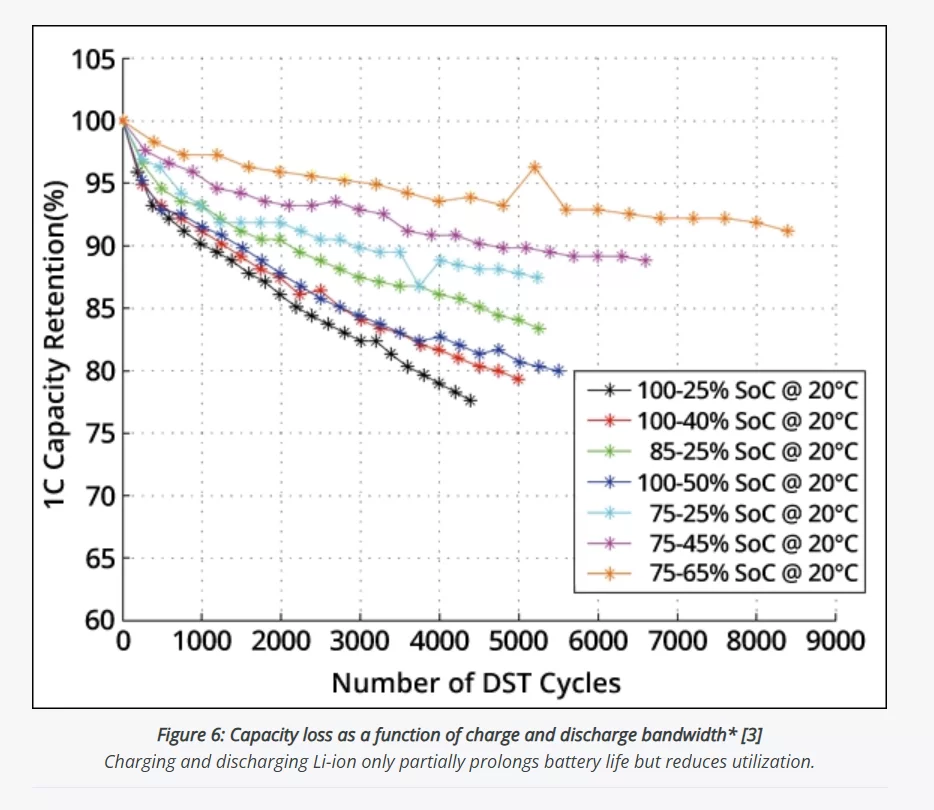
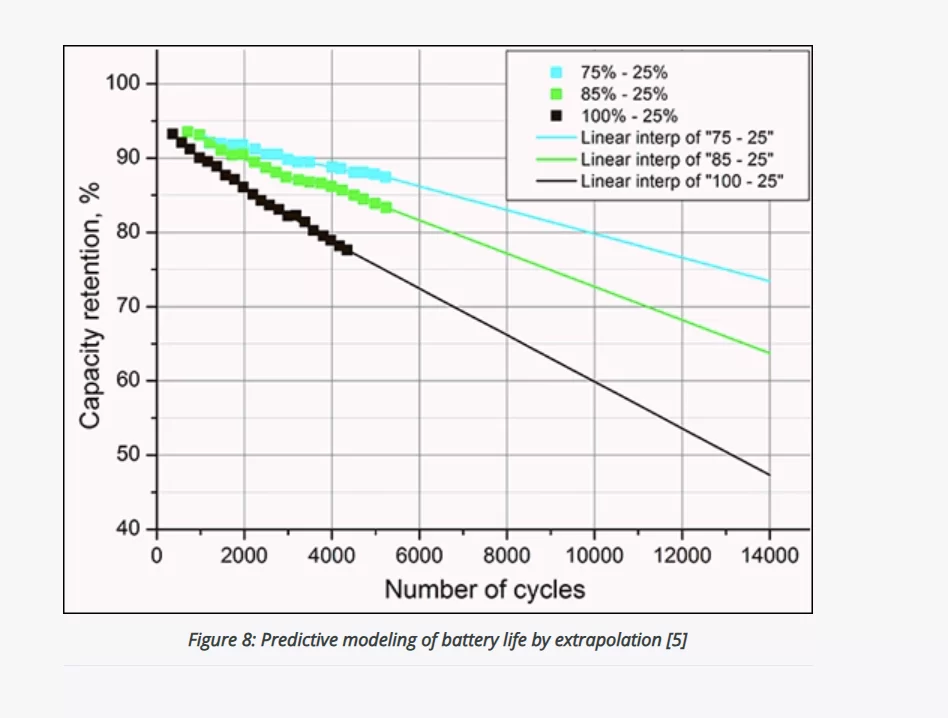
"Daily" is set to 50% on the App. but I might go to Denver sometimes and need at least 60% round-trip else be "robbed" by the BS 57-cents kwh fast-charge rate "on the road" or worse pay the Tesla Supercharger low-quality non-Tesla-handshake "tax" as their system cannot handle the 900v setup.
Most studies suggest with current Lithium-Ion battery pack technology, small discharge-charge "deltas" and "keeping in the middle" is best, especially between 25% and 75%.
GM will only allow users to discharge to 10% and max-charge to 80% except under rare circumstances (though it lies to the user and says 0% and 100%), as with a Chevy Volt at (alleged 100% "indicated" (aka 80%)) charge driving downhill for several hours from the Rocky Mountains gave over 100% charge max-range by 20%. Also, GM showed 0% remaining charge but still electric usage for another several miles. This was also the same in my Cadillac ELR. Current battery survival rate was 10 years at 60k miles before I was at 50% on all three GM EV cars at 80% to 20% and I want to do better this time around.
I've noticed Lucid leaves a "reserve" amount of battery for various reasons in some YT vids past 0% to not totally discharge. I think Lucid allows near-100% charge though.
It also shows repeated Level 3 charging is detrimental to LiOns.
BU-808: How to Prolong Lithium-based Batteries
Manufacturers take a conservative approach and specify the life of Li-ion in most consumer products as being between 300 and 500 discharge/charge cycles.…
www.batteryuniversity.com
Knowledge & Research | FMG
Books, videos, the Eltville Model and more resources on strategic future management.
www.futuremanagementgroup.com
- Joined
- May 1, 2022
- Messages
- 6,537
- Reaction score
- 10,435
- Location
- San Francisco, CA
- Cars
- Air Touring
- Referral Code
- MX1KDTYY
I’ve seen a few people now say that “daily” is 50% in the mobile app, and this is not quite accurate.
If you look at the user interface, you’ll see that daily and distance are both ranges, not a specific percentage. Daily is the range from 50 - 80%. Distance is 80 - 100%.
I stand by my original advice when it comes to your battery, which is to not worry about it. The whole advantage of having an EV is not worrying about your fuel source most days. Plug it in every night and set your max to anywhere in that Daily range, and you are good to go. Bask in the glory that is not having to worry about going to a gas station ever again.
The trade off is a slight inconvenience during the occasional road trip.
In that case, the same “don’t worry about it” applies. Charge to 100% and let it drain to 2% on road trips if needed. But even then most of the time you’ll only want to charge to 80 or 85% anyway, because that last 20% takes too long to be worth it.
Unless there really are no chargers you can get to, you almost never want to spend the extra time charging that high, anyway.
And no matter what you do, your behavior will have a smaller impact on your long term battery health than you think. We’re talking a matter of a few miles here and there of range capacity over the life of the car in most cases.
So stop worrying and charge as needed.
If you look at the user interface, you’ll see that daily and distance are both ranges, not a specific percentage. Daily is the range from 50 - 80%. Distance is 80 - 100%.
I stand by my original advice when it comes to your battery, which is to not worry about it. The whole advantage of having an EV is not worrying about your fuel source most days. Plug it in every night and set your max to anywhere in that Daily range, and you are good to go. Bask in the glory that is not having to worry about going to a gas station ever again.
The trade off is a slight inconvenience during the occasional road trip.
In that case, the same “don’t worry about it” applies. Charge to 100% and let it drain to 2% on road trips if needed. But even then most of the time you’ll only want to charge to 80 or 85% anyway, because that last 20% takes too long to be worth it.
Unless there really are no chargers you can get to, you almost never want to spend the extra time charging that high, anyway.
And no matter what you do, your behavior will have a smaller impact on your long term battery health than you think. We’re talking a matter of a few miles here and there of range capacity over the life of the car in most cases.
So stop worrying and charge as needed.
- Joined
- Nov 9, 2025
- Messages
- 825
- Reaction score
- 1,279
- Cars
- Model X, XC90, S4, LS460
- Air DE Number
- 1
- Gravity DE Number
- 160
- Referral Code
- 34DTL9L0
Essentially repeating the post couple-of-questions-on-charging-from-a-new-owner:
For battery health:
- Charge daily. Many small charges are better than a single 0% - 100% charge.
- When possible, stay close to 50% between charges and charge within the “daily” range. Staying between 35%-55% is optimal. Alternatively, plan for 40% - 60%, 30% - 70%, 20% - 80%, etc.
- Occasionally charging to 100% and depletion to 0% is fine for NMC (Lucid batteries) but minimize the time spent below 20% or above 80%. Drive soon after reaching 100%, and charge as quickly as you can near 0%, especially in hot climates.
- Practically speaking, you can ignore all of the above and charge/drive as you desire, and your battery will outlast the vehicle. Just avoid keeping the car near 100% charge or 0% charge for very long periods of time without driving/charging.
Other best practices that I’ve found:
- Use an EV rated NEMA 14-50 outlet as others have said. Don’t go cheap and risk overheating/melting/fire.
- Keeping the mobile charge plugged in all the time is fine. Unplugging when not in use is also fine to eliminate standby power. As others have mention, don’t use the breaker as a regular on/off switch.
- Although not strictly necessary, a permanent wall mounted charger is recommended for home charging. They give faster charging, are more efficient, and have smart features such as scheduled charging (typically better than the car), monitoring, and logging. This also allows the mobile charger to be kept permanently in the car for when you need it away from home.
- Don’t use aluminum wiring for EV charging. Insist on copper wiring.
For battery health:
- Charge daily. Many small charges are better than a single 0% - 100% charge.
- When possible, stay close to 50% between charges and charge within the “daily” range. Staying between 35%-55% is optimal. Alternatively, plan for 40% - 60%, 30% - 70%, 20% - 80%, etc.
- Occasionally charging to 100% and depletion to 0% is fine for NMC (Lucid batteries) but minimize the time spent below 20% or above 80%. Drive soon after reaching 100%, and charge as quickly as you can near 0%, especially in hot climates.
- Practically speaking, you can ignore all of the above and charge/drive as you desire, and your battery will outlast the vehicle. Just avoid keeping the car near 100% charge or 0% charge for very long periods of time without driving/charging.
Other best practices that I’ve found:
- Use an EV rated NEMA 14-50 outlet as others have said. Don’t go cheap and risk overheating/melting/fire.
- Keeping the mobile charge plugged in all the time is fine. Unplugging when not in use is also fine to eliminate standby power. As others have mention, don’t use the breaker as a regular on/off switch.
- Although not strictly necessary, a permanent wall mounted charger is recommended for home charging. They give faster charging, are more efficient, and have smart features such as scheduled charging (typically better than the car), monitoring, and logging. This also allows the mobile charger to be kept permanently in the car for when you need it away from home.
- Don’t use aluminum wiring for EV charging. Insist on copper wiring.
Last edited:
- Joined
- Jan 31, 2021
- Messages
- 3,000
- Reaction score
- 2,315
- Location
- Long Island
- Cars
- Tesla MY, BMW i5
- Referral Code
- 97KPWDUB
A couple of points though:
Most L2 chargers scheduled charging capabilities do not work with the Lucid. I can use it on my i5, but it’s useless on my Lucid Air. I instead must use the car’s scheduling and turn off my Home Flex charger’s scheduling.
I don’t think it’s a good practice to repeatedly pull & reinsert the charger plug just to save standby power. I agree keeping it plugged in all the time is fine and using the breaker as an on-off switch is a bad idea.
Most L2 chargers scheduled charging capabilities do not work with the Lucid. I can use it on my i5, but it’s useless on my Lucid Air. I instead must use the car’s scheduling and turn off my Home Flex charger’s scheduling.
I don’t think it’s a good practice to repeatedly pull & reinsert the charger plug just to save standby power. I agree keeping it plugged in all the time is fine and using the breaker as an on-off switch is a bad idea.
Just wondering, I drive my Air for 150 miles a day, so I know how to drain my battery below 20% and up to 0% on rare occasions. Would it be fine for me to regularly charge it to 100% and frequently drain it? Or should I stick to the 80% rule?A couple of points though:
Most L2 chargers scheduled charging capabilities do not work with the Lucid. I can use it on my i5, but it’s useless on my Lucid Air. I instead must use the car’s scheduling and turn off my Home Flex charger’s scheduling.
I don’t think it’s a good practice to repeatedly pull & reinsert the charger plug just to save standby power. I agree keeping it plugged in all the time is fine and using the breaker as an on-off switch is a bad idea.
- Joined
- Nov 9, 2025
- Messages
- 825
- Reaction score
- 1,279
- Cars
- Model X, XC90, S4, LS460
- Air DE Number
- 1
- Gravity DE Number
- 160
- Referral Code
- 34DTL9L0
Stick to 80%. See my post above. Frequently draining below 20% or charging above 80% leads to faster battery degradation.Just wondering, I drive my Air for 150 miles a day, so I know how to drain my battery below 20% and up to 0% on rare occasions. Would it be fine for me to regularly charge it to 100% and frequently drain it? Or should I stick to the 80% rule?
If you are using 30% battery for the 150 miles, you can probably get away with charging to 70% if you want to optimize, keeping the charge between 40% - 70%.
- Joined
- Jan 16, 2026
- Messages
- 275
- Reaction score
- 446
- Cars
- Lucid Gravity
That's typically recommended for all EVs with the Lithium NMC battery packs (like Lucid Air). Some long-term battery degradation is inevitable, but some things will make it worse. One of these is letting it set for a period of time with the battery near 100& or 0% state of charge. Being somewhere in the 20% to 80% range is a good rule of thumb for everyday use. If you are planning a long trip the next day, go ahead and charge to 100'%, just don't leave it there.Hi guys, I just got a new Lucid Air. I spoke to a Lucid technician and he recommended that I charge the car nightly to the 80% threshold as a best practice; he mentioned that it would not have any harmful or residual impact on the battery pack. I wonder if anyone else heard that recommendation before and your thoughts on it. Thanks