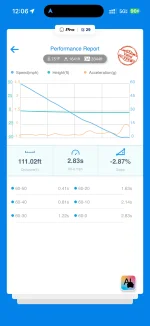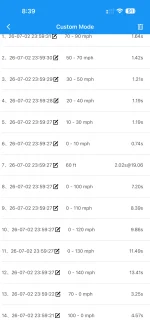

And I love my car, Lucid is probably the only company that reveals these much detail about their technology.I love this forum!
And I love my car, Lucid is probably the only company that reveals these much detail about their technology.I love this forum!

It’s not just programming. I’m sure Lucid tuned the drive software to eke out every ounce of performance at every speed.As someone that owned a Rivian, I think that the drive ratio has one of the largest parts to play in this. My R1 S topped out at 112 mph. It absolutely would not drive faster.
Also, I feel like it has a lot to do with software and software limiting the vehicles. If you think about it, there is zero difference physically between a GT air and a GT air performance and a GT dream edition. Everything in those vehicles physically is the same. The only difference is the programming.
Which led me to my very first post asking people what they pay for the ability to upgrade the performance in your vehicle. Would you pay to upgrade the 0 to 60 time in a gravity? I sure would.
 .
.
Yes, I am certain on this. And yes, they do. The Air DEs also have a different battery chemistry (from a different manufacturer) than the rest of the fleet. That’s also why the DE has 118kWh battery and the GT has 112kWh, despite having the same number of cells.I thought they were all the same… are you 100% on this? So the DE motors have higher output potential?
That one in the back is an imposter.Bunch of minivans
It’s on tippy toes pretending to be an SUVThat one in the back is an imposter.
100mph is not that much.during my demo drive two weeks ago I was going 155mphSure but who can use the speed over about 80mph. No one's taking their family at 100+mph in a gravity or tracking it. The most people will do are 0-60 on-ramp pulls or 1/4 mile runs for fun. No ones doing top speed runs for fun, so gearing for top end might be questionable. Winning 0-60 is a marketing/sales game also. Rivian caps their top speed at like 112-130mph and buyers dont care.
 lots of fun in German autobahn

Sure but who can use the speed over about 80mph. No one's taking their family at 100+mph in a gravity or tracking it. The most people will do are 0-60 on-ramp pulls or 1/4 mile runs for fun. No ones doing top speed runs for fun, so gearing for top end might be questionable. Winning 0-60 is a marketing/sales game also. Rivian caps their top speed at like 112-130mph and buyers dont care.
How much more expensive was de vs GGT?It’s not just programming. I’m sure Lucid tuned the drive software to eke out every ounce of performance at every speed.
As you said, the gear ratio plays a big part, and that’s why the R1S tops out at 112 mph, is great at 0-30 but drops off 30-80, and is terrible at the 1/4 mile (because of the top speed).
Lucid decided to optimize around real world passing situations instead of maximizing low end torque. The faster a motor spins, the greater the back EMF (and the lower the torque). That’s why Lucid starts to pass the Rivian around 30 mph.
Let’s not forget that the Gravity’s 0-60 times at 3.4 seconds still beats most “muscle cars.”
Still, I like fast and I did pay for 0-60 in 3.0 seconds with the GDE, which has a bigger front motor
About $20k.How much more expensive was de vs GGT?

I would always pay for more performance. And, yes, the infrequent blasts to make a highway move (I drive like it's all a chess game, watching other's moves, speed differentials, etc. to avoid getting stuck behind a left lane hog) the squirt between 80 and 100 can not only be useful but purely exhilirating!As someone that owned a Rivian, I think that the drive ratio has one of the largest parts to play in this. My R1 S topped out at 112 mph. It absolutely would not drive faster.
Also, I feel like it has a lot to do with software and software limiting the vehicles. If you think about it, there is zero difference physically between a GT air and a GT air performance and a GT dream edition. Everything in those vehicles physically is the same. The only difference is the programming.
Which led me to my very first post asking people what they pay for the ability to upgrade the performance in your vehicle. Would you pay to upgrade the 0 to 60 time in a gravity? I sure would.
GT-P is essentially the same car as the DE rather than the other way around. The batteries are the same as well as the physical modifications to the motors for controlling speed. Something with higher torque being unable to modulate speed as efficiently because the on and off states are larger. I don't remember the full details from Emad's interview linked earlier.That’s not quite true. In the Air, the DE has a different front or rear motor (I can’t remember tbh) with more exotic metallurgy, which is part of why it can do more.
The GT-P and GT are separated only by software, yes.

I realize that 0-60 times are important to some, but I appreciate the higher speed acceleration for passing. Fact is that times near 3 seconds will get anyone up to speed on entry to a highway without a problem. FWIW, after a few launch control starts in my Turbo S for 2.5 second times the thrill was gone. The only time power counted is entering a straight on the track. That is where acceleration matters but let's acknowledge that the Air, Gravity or any Rivian are not track weapons.This is right, Lucid tuned the torque curve on both Air and Gravity for great acceleration at higher speeds. I like this choice since it makes Gravity great at passing on two lane highways.
That makes sense; the short-lived GT-P was the response to people wanting more DEs. It had less HP and was $10k more, but *that* may have been software.GT-P is essentially the same car as the DE rather than the other way around. The batteries are the same as well as the physical modifications to the motors for controlling speed. Something with higher torque being unable to modulate speed as efficiently because the on and off states are larger. I don't remember the full details from Emad's interview linked earlier.
Folks will have to go way, way back to when the GT-P was first released. Derek Jenkins and Eric Bach both did multiple interviews explaining the difference in tuning, suspension, and a handful of other items. Tie that in with Emad's explanation of the motors from the interviews with The Savage Geese, all the differences start to add up beyond just software.

Only one of them is a 800+hp SleeperBunch of minivans
When we used to make fun of miata's for being slower than minivans....Now you have to make fun of almost everyone....