- Joined
- Sep 2, 2025
- Messages
- 8
- Reaction score
- 5
It’s been 3 months since I took delivery of a 2026 Lucid Air Touring, so I thought I would share my thoughts about the experience for anyone who is looking at buying or leasing the car. For background, my prior vehicle was a Rivian R1 and before that a BMW M550i. Those two vehicles I loved and regret letting them go.
Summary: I very much dislike this car and would be very hard pressed to recommend it to anyone without major improvements from Lucid. At this time, I have major regrets.
If you told Lucid they have $100 to spend on the car, it feels like they allocated $75 to the hardware (driving experience, general fit and finish) and then $25 to everything else (software, actual charging speed / compatibility). It’s not close to balanced at all in its current form, IMO. My initial mindset was “you can fix/update software, you can’t do much to the hardware”. I might have been wrong.
There are some seriously bad things about it and then a lot of smaller things that just add up and when taken into consideration with the really bad, makes it all worse. On a daily basis I have so many annoyances with this car I almost dread getting into it.
Good
- This is by far the smoothest driving vehicle I have ever operated. The suspension for city driving is incredible. Bumps and small holes I would’ve otherwise avoided are now hardly felt. There is a downside to this with a less than engaging sporty driving but for most of what I do it’s silky smooth.
- The power is smooth, instant, and torquey. The hood lifts up and comes back down after easing the throttle. Reminds me of my BMW, just silent
- It feels very much under control at all speeds
- Interior is elegant, even if understated
- The software / interface is generally fast. Snappy
- Overall trunk / frunk space is quite good. I like the bottom compartment in the trunk to keep my kids’s golf clubs
- Parking sensors and visual with distance to objects is very helpful.
- Efficiency is excellent, especially coming from my last two vehicles, 2.12 mi/kWh and 12.5 mpg. I’m a touch above 3.10 mi/kWh right now with only one true interstate road trip over 100 miles each way.
- I like the permanent controls on the far left driver’s screen
- Service associates have been friendly and professional
- Physical buttons for temp, fan speed, and center volume control. Wish there was one for the steering wheel adjustment
- Physical controls for the air vents. Rivian had electronic through the touch screen, which was very annoying and unnecessary
- Room in the backseat is spacious
Bad
- Software is so basic it feels like manual roll up windows in a world of power windows with auto up and down. It lacks what I would consider many basic features. The layout and intuitiveness is confusing. Ex - Themes gets a permanent large logo on the bottom screen and that function doesn’t do anything and isn’t used daily. Yet NAV and Music are smaller icons on the top screen, which are harder to reach ergonomically and used often during the driving experience. Charging doesn’t show power curves. The battery indicator is either the remaining estimated mileage or the %, but not both at the same time. Plenty of space for this. Native NAV works fine in my experience, but needs some cleanup as it can get pretty busy on the screen and hard to visually see the most relevant information such as small icons for exit number on the top screen. That icon should be larger. Spotify is very buggy. In the app I can’t tell if the AC and heated seats are on or off. In the car on the top left screen near the driver’s door the lock/unlock icon shows lock, I guess as an indicator, but intuitively if you want to unlock you press a button that shows locked. The overall UI needs more customization, information (battery temps, charging curve, etc), and a more intuitive and helpful layout. Themes having a prominent space but not music or NAV is amateur hour. For music, you should have better controls on the bottom screen with a slider, forward and backward in a time interval, skip song, etc. I do like how prominent the different drive modes are and that they are easy to change. I’d like to easily know the temp in the car without having to press the temp buttons. Overall, it doesn’t feel logically laid out, a bit unintuitive, but most of all, just doesn’t feel complete.
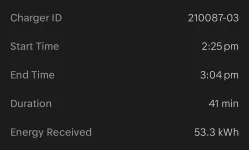
- Charging speed is not what is advertised. Not even close. I’ve only accomplished above 100kwh once (~105-107) and it was under the ideal conditions - warm air temps, preconditioned battery, high speed EA charger, low battery %. The “fast” charging is completely misrepresented and they are advertising a bill of goods they don’t deliver on. It’s so bad I had my car in for service and after looking it over they said this is just the design. So all the chest pounding about 900V and 200 miles in 15-20 minutes is a load of BS and Lucid should be held accountable for this. The car is now completely worthless for any type of road trip, unless you don’t care about sitting at a charger for 40-50 minutes to get what should take 1/2 the time. The last two fast charging sessions gave me an average of 5 miles added per minute of charging if you assume 4 miles / kWh. My Rivian was compatible with Tesla, which worked beautifully, and EVG and EA. Never an issue getting the speeds to hum as advertised. One of my most recent high speed charges was at EA. 21 minutes and received 25.5kWh. Using my 3.10 m/kWh, that’s a paltry ~76 miles added, not the 200 they advertise. Apparently, all the stars and moon have to align so perfectly for you to achieve true fast charging and I’ve yet to find that. There are a lot of adjectives you can use, none are good, to describe my experience with this so far.
- Regen braking is bipolar. It’s either working or it’s not at all as if you have selected it to be off. Coming from Rivian, where the regen braking had multiple settings and worked flawlessly, this is very disappointing. And dangerous.
- Cup holders make me as angry as the power of 1,000 suns. Did anyone try these before choosing them? A cup of coffee? A soda? A standard Stanley water bottle? Anything at all? Who signed off on this?
- Same goes for the wireless charging. Most phones have a case on but you have to take off the case to use the wireless charging slot. Terrible design again
- App, like software in the car, needs an overhaul. Waking the car in the app can take a long time. I find it helps to take the phone off WiFi, even with a strong signal. Functionality in the app is bad too. When it’s cold it tells me my windows are down but they are not. And as far as I know, I cannot roll my windows up or down from the app, which would be really helpful for when it’s late at night, cold, about to rain, or you’re not longer near the car. Rivian’s worked perfectly, as did the indicators in the app if something was left open. Also, the key fob is not only made of irrationally cheap material but it’s borderline useless.
- Trunk was delivered with one panel not flush so it sticks up above the panel before it and apparently this cannot be fixed without what sounds like major body work. If you’re going to make an ugly trunk lid, it better fit perfectly.
- Car Play resolution is bad. And it doesn’t fit well on the wedge top screen so I don’t bother with it
- Unless I’ve missed it, no recording using all the cameras? The Rivian had Gear Guard, which recorded movement and then if you honked the horn, slammed on brakes, or hit a record button, it would record clips. This came in handy often. Huge miss here
- Premium sound isn’t so premium. It doesn’t sound anymore spectacular than my stock Rivian system. It’s not immersive. Not very crisp or deep. Lucid should’ve partnered with B&O or someone to appropriately design a system specific for the car. $3,000 feels very steep for what you actually get.
- Wind / road noise. I suspect part of this is the efficiency of the vehicle but the windows feel really thin. It’s more noisy than I expected but it’s not terrible.
- Visibility out the driver and passenger windows is rough. I knew this going in but just an FYI, it’s rough. The A Pillar and the height of the windows is very limiting. Even my wife, who is <5’5”, commented on this.
- Takes some time for spatial awareness with the rear doors. Several times early on I would let my kids out of the car and then hit myself in the leg with the door or walk into the leading point. It’s an odd design that takes a while to get used to.
My review is only my experience so far. With the amount of time I spent reading and watching reviews before making my decision, it felt like there were a lot of them “hiding” things or they were too narrow in their review (e.g., only based on a single test drive). This car could be so much more. The easiest fix is a completely overhauled software and UI. The second fix is the charging issue, or maybe it is what it is, and in that case, it does not perform well against all of the other vehicles on the market. If you need a car for driving in less than a 100 mile radius, the charging may not be an issue. But if you ever want to take it on a road trip, I’d strongly advise against it.
Summary: I very much dislike this car and would be very hard pressed to recommend it to anyone without major improvements from Lucid. At this time, I have major regrets.
If you told Lucid they have $100 to spend on the car, it feels like they allocated $75 to the hardware (driving experience, general fit and finish) and then $25 to everything else (software, actual charging speed / compatibility). It’s not close to balanced at all in its current form, IMO. My initial mindset was “you can fix/update software, you can’t do much to the hardware”. I might have been wrong.
There are some seriously bad things about it and then a lot of smaller things that just add up and when taken into consideration with the really bad, makes it all worse. On a daily basis I have so many annoyances with this car I almost dread getting into it.
Good
- This is by far the smoothest driving vehicle I have ever operated. The suspension for city driving is incredible. Bumps and small holes I would’ve otherwise avoided are now hardly felt. There is a downside to this with a less than engaging sporty driving but for most of what I do it’s silky smooth.
- The power is smooth, instant, and torquey. The hood lifts up and comes back down after easing the throttle. Reminds me of my BMW, just silent
- It feels very much under control at all speeds
- Interior is elegant, even if understated
- The software / interface is generally fast. Snappy
- Overall trunk / frunk space is quite good. I like the bottom compartment in the trunk to keep my kids’s golf clubs
- Parking sensors and visual with distance to objects is very helpful.
- Efficiency is excellent, especially coming from my last two vehicles, 2.12 mi/kWh and 12.5 mpg. I’m a touch above 3.10 mi/kWh right now with only one true interstate road trip over 100 miles each way.
- I like the permanent controls on the far left driver’s screen
- Service associates have been friendly and professional
- Physical buttons for temp, fan speed, and center volume control. Wish there was one for the steering wheel adjustment
- Physical controls for the air vents. Rivian had electronic through the touch screen, which was very annoying and unnecessary
- Room in the backseat is spacious
Bad
- Software is so basic it feels like manual roll up windows in a world of power windows with auto up and down. It lacks what I would consider many basic features. The layout and intuitiveness is confusing. Ex - Themes gets a permanent large logo on the bottom screen and that function doesn’t do anything and isn’t used daily. Yet NAV and Music are smaller icons on the top screen, which are harder to reach ergonomically and used often during the driving experience. Charging doesn’t show power curves. The battery indicator is either the remaining estimated mileage or the %, but not both at the same time. Plenty of space for this. Native NAV works fine in my experience, but needs some cleanup as it can get pretty busy on the screen and hard to visually see the most relevant information such as small icons for exit number on the top screen. That icon should be larger. Spotify is very buggy. In the app I can’t tell if the AC and heated seats are on or off. In the car on the top left screen near the driver’s door the lock/unlock icon shows lock, I guess as an indicator, but intuitively if you want to unlock you press a button that shows locked. The overall UI needs more customization, information (battery temps, charging curve, etc), and a more intuitive and helpful layout. Themes having a prominent space but not music or NAV is amateur hour. For music, you should have better controls on the bottom screen with a slider, forward and backward in a time interval, skip song, etc. I do like how prominent the different drive modes are and that they are easy to change. I’d like to easily know the temp in the car without having to press the temp buttons. Overall, it doesn’t feel logically laid out, a bit unintuitive, but most of all, just doesn’t feel complete.
- Charging speed is not what is advertised. Not even close. I’ve only accomplished above 100kwh once (~105-107) and it was under the ideal conditions - warm air temps, preconditioned battery, high speed EA charger, low battery %. The “fast” charging is completely misrepresented and they are advertising a bill of goods they don’t deliver on. It’s so bad I had my car in for service and after looking it over they said this is just the design. So all the chest pounding about 900V and 200 miles in 15-20 minutes is a load of BS and Lucid should be held accountable for this. The car is now completely worthless for any type of road trip, unless you don’t care about sitting at a charger for 40-50 minutes to get what should take 1/2 the time. The last two fast charging sessions gave me an average of 5 miles added per minute of charging if you assume 4 miles / kWh. My Rivian was compatible with Tesla, which worked beautifully, and EVG and EA. Never an issue getting the speeds to hum as advertised. One of my most recent high speed charges was at EA. 21 minutes and received 25.5kWh. Using my 3.10 m/kWh, that’s a paltry ~76 miles added, not the 200 they advertise. Apparently, all the stars and moon have to align so perfectly for you to achieve true fast charging and I’ve yet to find that. There are a lot of adjectives you can use, none are good, to describe my experience with this so far.
- Regen braking is bipolar. It’s either working or it’s not at all as if you have selected it to be off. Coming from Rivian, where the regen braking had multiple settings and worked flawlessly, this is very disappointing. And dangerous.
- Cup holders make me as angry as the power of 1,000 suns. Did anyone try these before choosing them? A cup of coffee? A soda? A standard Stanley water bottle? Anything at all? Who signed off on this?
- Same goes for the wireless charging. Most phones have a case on but you have to take off the case to use the wireless charging slot. Terrible design again
- App, like software in the car, needs an overhaul. Waking the car in the app can take a long time. I find it helps to take the phone off WiFi, even with a strong signal. Functionality in the app is bad too. When it’s cold it tells me my windows are down but they are not. And as far as I know, I cannot roll my windows up or down from the app, which would be really helpful for when it’s late at night, cold, about to rain, or you’re not longer near the car. Rivian’s worked perfectly, as did the indicators in the app if something was left open. Also, the key fob is not only made of irrationally cheap material but it’s borderline useless.
- Trunk was delivered with one panel not flush so it sticks up above the panel before it and apparently this cannot be fixed without what sounds like major body work. If you’re going to make an ugly trunk lid, it better fit perfectly.
- Car Play resolution is bad. And it doesn’t fit well on the wedge top screen so I don’t bother with it
- Unless I’ve missed it, no recording using all the cameras? The Rivian had Gear Guard, which recorded movement and then if you honked the horn, slammed on brakes, or hit a record button, it would record clips. This came in handy often. Huge miss here
- Premium sound isn’t so premium. It doesn’t sound anymore spectacular than my stock Rivian system. It’s not immersive. Not very crisp or deep. Lucid should’ve partnered with B&O or someone to appropriately design a system specific for the car. $3,000 feels very steep for what you actually get.
- Wind / road noise. I suspect part of this is the efficiency of the vehicle but the windows feel really thin. It’s more noisy than I expected but it’s not terrible.
- Visibility out the driver and passenger windows is rough. I knew this going in but just an FYI, it’s rough. The A Pillar and the height of the windows is very limiting. Even my wife, who is <5’5”, commented on this.
- Takes some time for spatial awareness with the rear doors. Several times early on I would let my kids out of the car and then hit myself in the leg with the door or walk into the leading point. It’s an odd design that takes a while to get used to.
My review is only my experience so far. With the amount of time I spent reading and watching reviews before making my decision, it felt like there were a lot of them “hiding” things or they were too narrow in their review (e.g., only based on a single test drive). This car could be so much more. The easiest fix is a completely overhauled software and UI. The second fix is the charging issue, or maybe it is what it is, and in that case, it does not perform well against all of the other vehicles on the market. If you need a car for driving in less than a 100 mile radius, the charging may not be an issue. But if you ever want to take it on a road trip, I’d strongly advise against it.
Last edited: