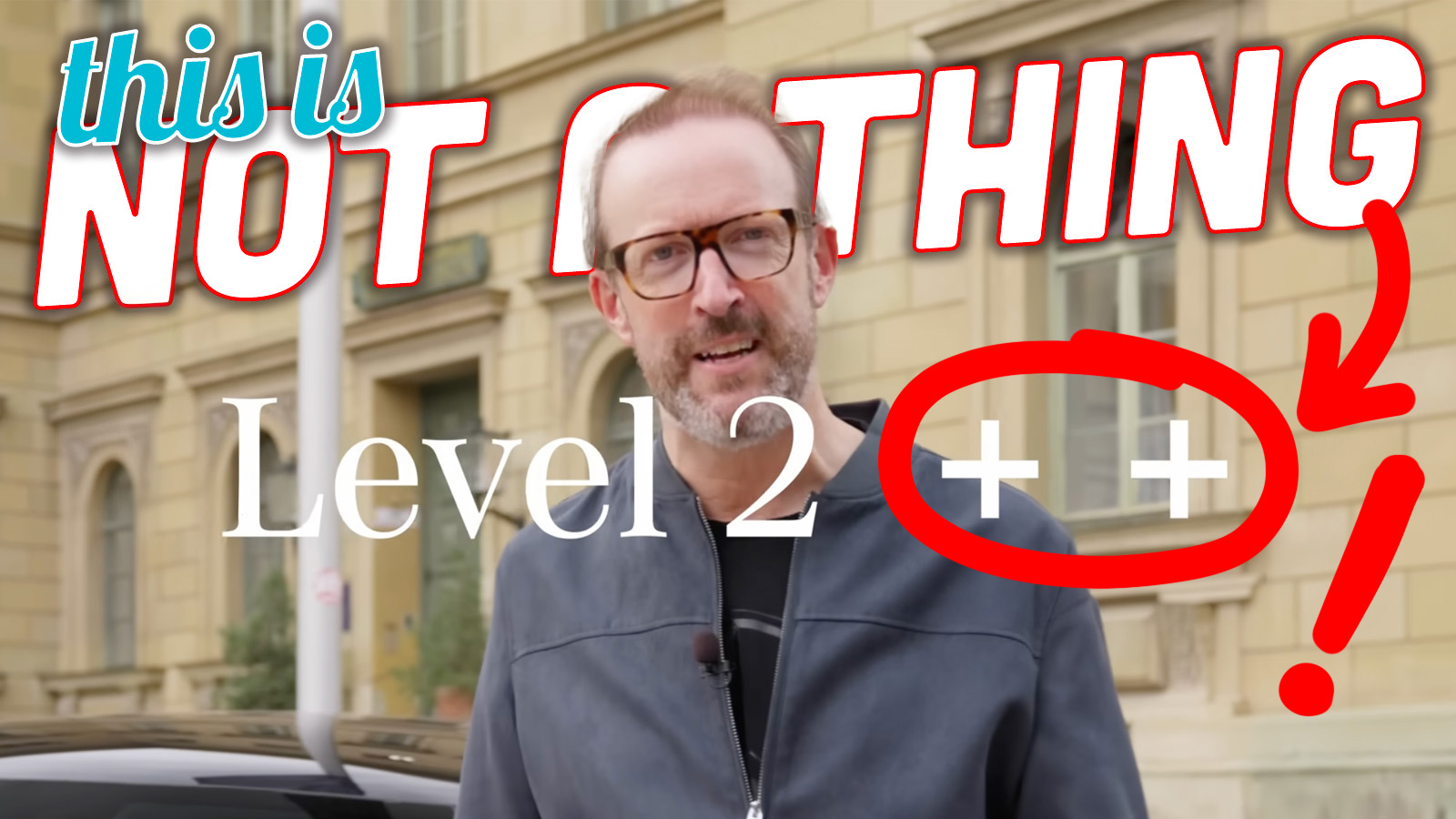
Interim CEO claims L2++ EoY and L4 by 2029

How much do you use cruise control? Would you get a car without it?

A lot of driving is dull: Stuck in rush hour traffic on the daily commute, long road trips on highways, have passengers who simply want a comfortable ride, tired and just want to get from point A to point B. I want manual driving and Gravity’s performance when I can have fun, but I also want FSD as a super-powered cruise control for the boring times.
I must say that I have two sports cars that both have cruise control. On one of them I MIGHT use CC once or twice a year. On the other (manual transmission) I have actually never used it. They are just that much fun to drive. But I may be an outlier.
 
I use the adaptive cruise control much less than I used old fashioned fixed cc. I varies speed at just the wrong time.
 
Its not the curves its the interuption of the driving flow. Even with the distance set to minimum. I don't mind. I really only use cc to keep from speeding.
 
Apologies for joining this thread late. Question re HW...I have a DE and watched a video that touched on the new HW in the Gravity/Uber/etc. robotaxi.

See 3:40 or so.

The interviewer was speaking with the interim CEO, who asked about the different HW versions. The stock HW in the existing Gravity has been covered in several of the above entries in this thread. The new nVidia HW going into the Gravity Robotaxi is version R4 to achieve L4 capabilities. The CEO said this more advanced HW will NOT be in the consumer-facing Gravity products. He then went on to say that autonomy for the consumer will come through a different path. I have a Model Y and a Gravity DE. Dream Drive feels like where Tesla was >5 years ago...clumsy, unpredictable, and no navigation integration. Does anyone know what the other path the CEO is talking about for consumer-facing Gravity vehicles is? And how far can the existing HW go in terms of much better/smoother/predictable/safer assist driving that integrates navigation? What is the long term plan? I cant seem to find any details on this. Will we see something beyond L2+?
 
Apologies for joining this thread late. Question re HW...I have a DE and watched a video that touched on the new HW in the Gravity/Uber/etc. robotaxi.

See 3:40 or so.

The interviewer was speaking with the interim CEO, who asked about the different HW versions. The stock HW in the existing Gravity has been covered in several of the above entries in this thread. The new nVidia HW going into the Gravity Robotaxi is version R4 to achieve L4 capabilities. The CEO said this more advanced HW will NOT be in the consumer-facing Gravity products. He then went on to say that autonomy for the consumer will come through a different path. I have a Model Y and a Gravity DE. Dream Drive feels like where Tesla was >5 years ago...clumsy, unpredictable, and no navigation integration. Does anyone know what the other path the CEO is talking about for consumer-facing Gravity vehicles is? And how far can the existing HW go in terms of much better/smoother/predictable/safer assist driving that integrates navigation? What is the long term plan? I cant seem to find any details on this. Will we see something beyond L2+?
You can't find anything b/c I don't think they've said anything about their roadmap beyond L2. The safe bet is that they'll incrementally improve it like what Tesla has done, but without the roadmap that you're looking for since they're somewhat dependent on getting enough driving data + Nvidia progress (though to be fair, Tesla also doesn't announce their improvements until a couple of days before they launch it).
 
Apologies for joining this thread late. Question re HW...I have a DE and watched a video that touched on the new HW in the Gravity/Uber/etc. robotaxi.

See 3:40 or so.

The interviewer was speaking with the interim CEO, who asked about the different HW versions. The stock HW in the existing Gravity has been covered in several of the above entries in this thread. The new nVidia HW going into the Gravity Robotaxi is version R4 to achieve L4 capabilities. The CEO said this more advanced HW will NOT be in the consumer-facing Gravity products. He then went on to say that autonomy for the consumer will come through a different path. I have a Model Y and a Gravity DE. Dream Drive feels like where Tesla was >5 years ago...clumsy, unpredictable, and no navigation integration. Does anyone know what the other path the CEO is talking about for consumer-facing Gravity vehicles is? And how far can the existing HW go in terms of much better/smoother/predictable/safer assist driving that integrates navigation? What is the long term plan? I cant seem to find any details on this. Will we see something beyond L2+?
Well he’s been pretty clear to date. L2++ is coming to Gravity by year end (point to point navigation). L4 is coming to Earth.

I wouldn’t be expecting Gravity to be going above L2. You can’t compare the Robotaxi to the consumer version of the Gravity. One has equipment for commercial use and the other has equipment for consumer use. We’re not all getting roof mounted Nuro’s installed on our cars 😂
 
Totally get it and yes, the Robotaxi and consumer-facing Gravity are two very different cars that share a common driving platform. The ADAS requirements, sensor fusion, and the tremendous amount of training data needed for L4 are not something we would ever expect in a consumer product. So totally agree, not a good comparison. However, having the CEO hint at a different consumer path begs the question, what is the roadmap? Since the video cut right after his statement, indicating a different consumer path, we could give him the benefit of the doubt and say maybe he said more, which was left on the cutting room floor. But this would be important and not likely to be cut out. So...again, Lucid has attempted to differentiate itself from Tesla...so why not share a roadmap with some very rough timeline and a ton of caveats. That would be un-Tesla-like and certainly welcome to us early adopters who are quite tolerant of variability in timelines.
 
Totally get it and yes, the Robotaxi and consumer-facing Gravity are two very different cars that share a common driving platform. The ADAS requirements, sensor fusion, and the tremendous amount of training data needed for L4 are not something we would ever expect in a consumer product. So totally agree, not a good comparison. However, having the CEO hint at a different consumer path begs the question, what is the roadmap? Since the video cut right after his statement, indicating a different consumer path, we could give him the benefit of the doubt and say maybe he said more, which was left on the cutting room floor. But this would be important and not likely to be cut out. So...again, Lucid has attempted to differentiate itself from Tesla...so why not share a roadmap with some very rough timeline and a ton of caveats. That would be un-Tesla-like and certainly welcome to us early adopters who are quite tolerant of variability in timelines.
Nvidia Drive is the consumer system and Lucid's path to L4. Orin which is in the Gravity will offer L2++ by year end (but…. We all know how well Lucid delivers on a promised timeline). L4 will be offered with Earth using Thor but with a delivery timeline of 2029.

On their last earnings call, Marc made it pretty clear they don’t want to do their own system in house as it’s not money well spent at the moment and it’s actually something I agree with them on. They’ve gotten in bed with Nvidia and seems they’re in it for the long haul given the press releases etc.
 
Nvidia Drive is the consumer system and Lucid's path to L4. Orin which is in the Gravity will offer L2++ by year end (but…. We all know how well Lucid delivers on a promised timeline). L4 will be offered with Earth using Thor but with a delivery timeline of 2029.

On their last earnings call, Marc made it pretty clear they don’t want to do their own system in house as it’s not money well spent at the moment and it’s actually something I agree with them on. They’ve gotten in bed with Nvidia and seems they’re in it for the long haul given the press releases etc.
From what I can tell, and from The Autopian, L2++ is also a meaningless term.

 
From what I can tell, and from The Autopian, L2++ is also a meaningless term.

I wouldn't pay too much attention to that article. Getting wrapped up in arguments about semantics is usually a waste of time for everyone involved. The reason why Lucid is talking about "L2++" is because the range of driving assistance systems that count as L2 according to the SAE classification system is incredibly broad. The functionality includes everything from the dumbest cruise control system you've ever used all the way out to Tesla's FSD. All Lucid is attempting to do by using the term L2++ is to convey that they intend to offer progressively more sophisticated driver assistance systems, all while maintaining the requirement for a licensed driver to monitor the car and be prepared to take control if necessary.
 
I'm not a tech person, but it would appear to me that only Waymo has FSD, and they get it via brute force familiarization, from what I understand.

I still take the train to work, and will mostly just use the gravity for road trips and weekend errands. Its an extravagance. So I know that puts me in small subset of an already small set. I will use DDP for long interstate sections of road trips.

That said, why would you buy such a fun car to drive only to let the car drive itself?

Excoriate me.
Every one's needs might not be the same.

I think you are missing the point here.

It's not about why anyone needs L2++ for their Air but it's about why promising at all?

If they were told that their Air will not progress to L2++ then they wouldn't pay for DreamDrive Pro.
 
Apologies for joining this thread late. Question re HW...I have a DE and watched a video that touched on the new HW in the Gravity/Uber/etc. robotaxi.

See 3:40 or so.

The interviewer was speaking with the interim CEO, who asked about the different HW versions. The stock HW in the existing Gravity has been covered in several of the above entries in this thread. The new nVidia HW going into the Gravity Robotaxi is version R4 to achieve L4 capabilities. The CEO said this more advanced HW will NOT be in the consumer-facing Gravity products. He then went on to say that autonomy for the consumer will come through a different path. I have a Model Y and a Gravity DE. Dream Drive feels like where Tesla was >5 years ago...clumsy, unpredictable, and no navigation integration. Does anyone know what the other path the CEO is talking about for consumer-facing Gravity vehicles is? And how far can the existing HW go in terms of much better/smoother/predictable/safer assist driving that integrates navigation? What is the long term plan? I cant seem to find any details on this. Will we see something beyond L2+?
As a veteran of the auto show and tech show circuits I think I can help with this. There are several reasons why Winterhoff didn't (and won't) disclose the information you were hoping to hear.

  1. You only want to provide enough information to make your competitors sufficiently nervous and potential suppliers clear that you are serious. You don't want to show them all your cards.
  2. You don't want prospective customers to know exactly how long to hold off their purchases until the newer shinier thing comes along.
  3. They recognize that the timing is more fluid than they would like it to be.
So the tendency is to describe the vision, highlight the technical advantages that are going to get you there, and be very vague on the timeframe lest you get called on it when it doesn't happen <cough> Elon <cough>.
 
Well he’s been pretty clear to date. L2++ is coming to Gravity by year end (point to point navigation). L4 is coming to Earth.

I wouldn’t be expecting Gravity to be going above L2. You can’t compare the Robotaxi to the consumer version of the Gravity. One has equipment for commercial use and the other has equipment for consumer use. We’re not all getting roof mounted Nuro’s installed on our cars 😂
What planet is it on now? 😉
 
Agree that L2 classification is somewhat broad right now. It can cover everything from basic adaptive cruise control with primitive lane keeping assistance that ping pongs down the lane, up to Tesla’s current FSD-Supervised. Lucid using the L2++ designation imply’s that they are aiming for a FSD-Supervised type system for Orin based Gravity.

I find it interesting that there is a much larger difference in capabilities with L2 cars than there is between L2++ and L3. The only difference between capabilities of L2++ and L3 is that L3 does not require driver supervision. Both systems can do the same things, it is just that with L3, the manufacturer is more confident that their system will not make a mistake and can now allow the driver to tune out and stop monitoring the car. Thus why Lucid says only upcoming Earth with the soon to be released Thor processor will eventually get to L4. Earth will not necessarily have a bunch of new sensors, lidars, radars, etc. but rather a much bigger processor that can take in all the input those sensors are sending it and make a much faster and accurate decision on what to do in tricky situations.

I also have read that one of the key differences between L3 and L4 is that with L3, the driver is still responsible for if something goes wrong, while L4 the manufacturer takes full responsibility if car gets in accident while in self drive. Based on this, I have no desire to experiment with L3. I’ll wait until full L4 is out and vetted before I move on from L2++.
 
I also have read that one of the key differences between L3 and L4 is that with L3, the driver is still responsible for if something goes wrong
Technically yes and no. If the car crashes as a result of its own driving then the manufacturer is liable but if the driver was told to take over and ignored it then yes, they’re liable. But let’s be real, in the real world scenario it’s always going to be the cars fault because people lie and it’s going to be this long & drawn out process for the automaker to prove whether it was their fault or the drivers. Why do you think Tesla has never gone L3? The system is certainly capable of it. They don’t want the liability of it.

I think L2++ is going to be the limit for many years to come as the liability still falls on the owner and is the safer bet for automakers. When L4 is eventually green lit can you imagine the insurance policy automakers are going to need to carry in the event something goes wrong. Is that baked into the cars cost etc. because someone’s gotta pay. Could you imagine if the regulations change and for consumer cars the owner is still liable for L4 in the event of a crash. Your insurance premiums would be through the roof!

Personally, I think L4 should remain commercial for the foreseeable future. It’s a limited pool of cars with no doubt huge insurance policies to cover them. Expand it to the masses and it could send companies bankrupt.
 
Agree that L2 classification is somewhat broad right now. It can cover everything from basic adaptive cruise control with primitive lane keeping assistance that ping pongs down the lane, up to Tesla’s current FSD-Supervised. Lucid using the L2++ designation imply’s that they are aiming for a FSD-Supervised type system for Orin based Gravity.

I find it interesting that there is a much larger difference in capabilities with L2 cars than there is between L2++ and L3. The only difference between capabilities of L2++ and L3 is that L3 does not require driver supervision. Both systems can do the same things, it is just that with L3, the manufacturer is more confident that their system will not make a mistake and can now allow the driver to tune out and stop monitoring the car. Thus why Lucid says only upcoming Earth with the soon to be released Thor processor will eventually get to L4. Earth will not necessarily have a bunch of new sensors, lidars, radars, etc. but rather a much bigger processor that can take in all the input those sensors are sending it and make a much faster and accurate decision on what to do in tricky situations.

I also have read that one of the key differences between L3 and L4 is that with L3, the driver is still responsible for if something goes wrong, while L4 the manufacturer takes full responsibility if car gets in accident while in self drive. Based on this, I have no desire to experiment with L3. I’ll wait until full L4 is out and vetted before I move on from L2++.
Guess that I will have to soldier on with my '23 AGT, but I am perfectly happy with the system it now has. I have no idea if it will be possible to upgrade processors in my car in the future but if not I will not feel deprived and did not order my car in 2022 with any expectation of self driving at any advanced level, unless the advanced features can with 100% accuracy avoid harming sentient beings and avoid golf ball-sized rocks or sticks in the road. Except for long interstate drives where hands free is tolerably good, I rather like driving my AGT.
 
As a veteran of the auto show and tech show circuits I think I can help with this. There are several reasons why Winterhoff didn't (and won't) disclose the information you were hoping to hear.

  1. You only want to provide enough information to make your competitors sufficiently nervous and potential suppliers clear that you are serious. You don't want to show them all your cards.
  2. You don't want prospective customers to know exactly how long to hold off their purchases until the newer shinier thing comes along.
  3. They recognize that the timing is more fluid than they would like it to be.
So the tendency is to describe the vision, highlight the technical advantages that are going to get you there, and be very vague on the timeframe lest you get called on it when it doesn't happen <cough> Elon <cough>.
Excellent points, and I agree that is the safe and expected route for the CEO to take. However, given the gap between where Dream Drive is now and where my Tesla Y HW3 is today...I think he needs to be a little more forthcoming. Again...just a desire, but as you point out, unlikely ... especially since there is the word "interim" in front of his title.
 
[…] But let’s be real, in the real world scenario it’s always going to be the cars fault because people lie and it’s going to be this long & drawn out process for the automaker to prove whether it was their fault or the drivers. […]

I would think all the cameras, recordings, amd telemetry would make the decision much easier. I put dashcams in all my cars to avoid the he-said-she-said. I’m glad the Gravity has Halo Secure.
 
Technically yes and no. If the car crashes as a result of its own driving then the manufacturer is liable but if the driver was told to take over and ignored it then yes, they’re liable. But let’s be real, in the real world scenario it’s always going to be the cars fault because people lie and it’s going to be this long & drawn out process for the automaker to prove whether it was their fault or the drivers. Why do you think Tesla has never gone L3? The system is certainly capable of it. They don’t want the liability of it.

I think L2++ is going to be the limit for many years to come as the liability still falls on the owner and is the safer bet for automakers. When L4 is eventually green lit can you imagine the insurance policy automakers are going to need to carry in the event something goes wrong. Is that baked into the cars cost etc. because someone’s gotta pay. Could you imagine if the regulations change and for consumer cars the owner is still liable for L4 in the event of a crash. Your insurance premiums would be through the roof!

Personally, I think L4 should remain commercial for the foreseeable future. It’s a limited pool of cars with no doubt huge insurance policies to cover them. Expand it to the masses and it could send companies bankrupt.
Agree, the added cost for a halo-like structure or the typical festooning of LIDAR on a Waymo car would be prohibitively expensive for a consumer-use car. The economics just don't make sense, and an L4 car has to be carrying passengers for as many hours as possible in a day to be profitable. Lots of analysis on this from McKinsey, Goldman, etc. The L4 consumer car duty cycle is just too short for any reasonable payback. Excellent point on insurance - L2++ with some verifiable driver monitoring will be considerably less and simplifies the "at fault" determination. I think you are right L2++ or enhanced or whatever we want to call it will likely be with us for a very long time. In that case the L2++ hints we get from Lucid make sense and fingers crossed for at least nav integration in DreamDrive by end of year.
 
Back
Top