
You are using an out of date browser. It may not display this or other websites correctly.
You should upgrade or use an alternative browser.
You should upgrade or use an alternative browser.
Front subwoofers - 6.5 - 8”
- Thread starter bmcinsd
- Start date
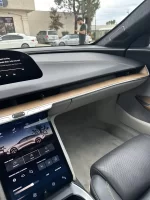

Thought about it, but never implemented because the car was a short-term lease. Bought an Air with SSP instead and it is worlds apart from standard SS. Not great but much more livable day-to-day.
If you are willing to sacrifice 4-6 inches of space in the passenger side footwell, a better performing solution would be to add a custom enclosure for a shallow 8 or 10 inch "front sub" there. This has become a popular option for high end car audio. If done properly, it would vastly outperform anything you could do with the smaller center console space and would likely be less laborious to integrate with the interior. The passenger legroom in the Air is great, so this is one of the few vehicles a front sub can be installed without making the passenger uncomfortable.
You may already be accounting for this, but I need to mention it...adding a speaker into an existing system without the capability to control time delay/phase and equalization may make the entire system worse. Reproduction that is out of time/phase results in nulls at certain frequecies where cancellation occurs, and you may end up with an enclosure design/location that has its own nulls/peaks that require taming. In home audio the time domain can be addressed by moving speaker enclosure locations to alter the time/phase relationships in the listening space. In car audio this needs to be addressed in the digital domain with a digital signal processor (DSP) since speaker locations are static.
Modern OEM audio systems have DSPs that apply time/phase/crossover/EQ adjustments to each of the speaker locations. Aftermarket car audio DSPs allow integration that grabs the audio signal from the OEM system (may require summing from multiple channels) and applies the appropriate changes for the new location(s) and speakers/amplification you choose. This goes beyond using a simple line out converter (LOC) and adding a subwoofer in a similar location as the factory one. For example, in this case if you wanted to grab the signal from the rear deck woofer (which IIRC plays much higher frequencies than the SSP woofer) with an LOC to use for a woofer in the front, you will likely have created a timing issue because the front woofer is now closer to you than the rear deck location.
While I agree standard SS has a lot of shortcomings with the low end frequencies being the greatest disappointment, it is possible to make it worse with a poorly executed add on.
If you are willing to sacrifice 4-6 inches of space in the passenger side footwell, a better performing solution would be to add a custom enclosure for a shallow 8 or 10 inch "front sub" there. This has become a popular option for high end car audio. If done properly, it would vastly outperform anything you could do with the smaller center console space and would likely be less laborious to integrate with the interior. The passenger legroom in the Air is great, so this is one of the few vehicles a front sub can be installed without making the passenger uncomfortable.
You may already be accounting for this, but I need to mention it...adding a speaker into an existing system without the capability to control time delay/phase and equalization may make the entire system worse. Reproduction that is out of time/phase results in nulls at certain frequecies where cancellation occurs, and you may end up with an enclosure design/location that has its own nulls/peaks that require taming. In home audio the time domain can be addressed by moving speaker enclosure locations to alter the time/phase relationships in the listening space. In car audio this needs to be addressed in the digital domain with a digital signal processor (DSP) since speaker locations are static.
Modern OEM audio systems have DSPs that apply time/phase/crossover/EQ adjustments to each of the speaker locations. Aftermarket car audio DSPs allow integration that grabs the audio signal from the OEM system (may require summing from multiple channels) and applies the appropriate changes for the new location(s) and speakers/amplification you choose. This goes beyond using a simple line out converter (LOC) and adding a subwoofer in a similar location as the factory one. For example, in this case if you wanted to grab the signal from the rear deck woofer (which IIRC plays much higher frequencies than the SSP woofer) with an LOC to use for a woofer in the front, you will likely have created a timing issue because the front woofer is now closer to you than the rear deck location.
While I agree standard SS has a lot of shortcomings with the low end frequencies being the greatest disappointment, it is possible to make it worse with a poorly executed add on.
Thank you for your feedback, very much appreciated! My plan is to start with the Helix V12 Amp & DSP (12 channel) and power the original 9 speaker system and perhaps additional two speakers. Also adding an additional subwoofer/amp in the trunk sub-storage. I have heard adjusting the DSP on the standard system makes a big difference. A local installer did suggest the construction of a passenger 8-10" footwell subwoofer but not sure how that might look. A big question that I have is how to integrate a Helix or Audison AMP/DSP into the standard system when it comes to grabbing the audio signal. Thoughts?
Helix makes great aftermarket DSP amplifiers. Their software is incredible to use and there are many tutorials available online for workflows if you are not already familiar.
If you're planning to execute this install, you'll likely need to pull the line level signals post-amplifier and use Helix's input signal analyzer to determine what channels need to be patched together to provide a full bandwidth signal. My guess is you'll need to pull in the a-pillar tweeters, the dash mids, and the rear deck woofer to get the full spectrum of frequencies. Hopefully standard SS has a clean signal from 20Hz - 20kHz, but it may have early rolloff on the low and top ends to protect the rear woofer from playing too low and limit the tweeters from trying to reproduce frequencies higher than they were designed for. If so you may be able to compensate and achieve a flat signal with high and low shelf input EQ depending on how steep any rolloff would be.
As far as the front sub, if done properly, you won't see anything out of place. A beauty panel with matching carpet would cover the enclosure. Here's an example of what you would be looking at. The angle of the foot rest can be adjusted for whatever comfortable position is desired.
If you're planning to execute this install, you'll likely need to pull the line level signals post-amplifier and use Helix's input signal analyzer to determine what channels need to be patched together to provide a full bandwidth signal. My guess is you'll need to pull in the a-pillar tweeters, the dash mids, and the rear deck woofer to get the full spectrum of frequencies. Hopefully standard SS has a clean signal from 20Hz - 20kHz, but it may have early rolloff on the low and top ends to protect the rear woofer from playing too low and limit the tweeters from trying to reproduce frequencies higher than they were designed for. If so you may be able to compensate and achieve a flat signal with high and low shelf input EQ depending on how steep any rolloff would be.
As far as the front sub, if done properly, you won't see anything out of place. A beauty panel with matching carpet would cover the enclosure. Here's an example of what you would be looking at. The angle of the foot rest can be adjusted for whatever comfortable position is desired.
Here's a video with a pretty good explanation of a front sub install in a new Model Y (second half of the video). This is a SQ competition car so it is way overbuilt relative to what an average build would need, but gives you an idea of construction, install considerations, and resulting footwell space consumption using a shallow woofer.
Plenty of tutorials out there. Here are a couple to get you started.
This DIYMA thread catalogs several tutorials done by Resonix. https://www.diymobileaudio.com/thre...ech-tip-videos-helix-pc-tool-rew-more.467235/
A different YouTuber - Socket - has done a good job stepping through the process from setup to fine tuning.
Also recommend looking at the Resonix site. Nick Apicella (Resonix) shares a lot of his knowledge - if you don't know who he is, Nick is one of the most respected tuners out there. He has posted a tuning guide on his website that includes tuning tracks and house curves. https://resonixsoundsolutions.com/blogs/resources/car-audio-dsp-tuning-tracks-guide
This DIYMA thread catalogs several tutorials done by Resonix. https://www.diymobileaudio.com/thre...ech-tip-videos-helix-pc-tool-rew-more.467235/
A different YouTuber - Socket - has done a good job stepping through the process from setup to fine tuning.
Also recommend looking at the Resonix site. Nick Apicella (Resonix) shares a lot of his knowledge - if you don't know who he is, Nick is one of the most respected tuners out there. He has posted a tuning guide on his website that includes tuning tracks and house curves. https://resonixsoundsolutions.com/blogs/resources/car-audio-dsp-tuning-tracks-guide