Another world first: Losing panels

037

Active Member

Joined
Nov 11, 2024
Messages
1,299
Reaction score
1,325
Cars
Gravity GT, Linc Aviator
one is probably my fault, one not so much.

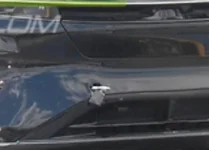
I lost the tow hook cover as I forgot to put the hook away before leaving the track.

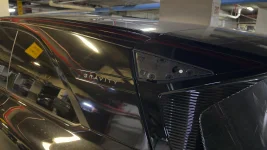
First time looking at car after coming home and it’s missing driver side spoiler paint panel, the same spoiler that was replaced for a defective rear wiper.
 

Attachments

  • d7d63d16-3c88-49b5-88b5-25074ff9cedc.webp
    d7d63d16-3c88-49b5-88b5-25074ff9cedc.webp
    20.2 KB · Views: 282
  • IMG_9511.webp
    IMG_9511.webp
    310.6 KB · Views: 261
Must be an assembly issue, on my loaner Gravity that panel is on crooked maybe it’s starting to fall off.

There is also a LOT of two sided tape used on these cars. A problematic amount.
 
There is a TSC campaign for that one that I had a done by mobile service.

1778352175662.webp
 
  • Like
Reactions: 037
There is also a LOT of two sided tape used on these cars. A problematic amount.

Use of Double-Sided Tape in Automotive Manufacturing​

Automotive manufacturers increasingly rely on double-sided tape for attaching various vehicle components. This method is favored for its strength, durability, and versatility in bonding different materials.

1778353380366.webp


Advantages of Using Double-Sided Tape​

  • Strength and Durability: Offers a strong bond that can endure various weather conditions.
  • Versatility: Effective for bonding dissimilar materials, including plastics and metals.
  • Efficiency: Speeds up the assembly process compared to traditional hardware like screws and bolts.
Double-sided tape has become an integral part of modern vehicle assembly, contributing to improved production efficiency and vehicle performance.
 

Use of Double-Sided Tape in Automotive Manufacturing​

Automotive manufacturers increasingly rely on double-sided tape for attaching various vehicle components. This method is favored for its strength, durability, and versatility in bonding different materials.

View attachment 38667

Advantages of Using Double-Sided Tape​

  • Strength and Durability: Offers a strong bond that can endure various weather conditions.
  • Versatility: Effective for bonding dissimilar materials, including plastics and metals.
  • Efficiency: Speeds up the assembly process compared to traditional hardware like screws and bolts.
Double-sided tape has become an integral part of modern vehicle assembly, contributing to improved production efficiency and vehicle performance.
Nice. I like it when facts are used to counter negative conjecture from a single data point.
 

Advantages of Using Double-Sided Tape​

  • Strength and Durability: Offers a strong bond that can endure various weather conditions.
  • Versatility: Effective for bonding dissimilar materials, including plastics and metals.
  • Efficiency: Speeds up the assembly process compared to traditional hardware like screws and bolts.
Double-sided tape has become an integral part of modern vehicle assembly, contributing to improved production efficiency and vehicle performance.
I realize this nomenclature is technically correct, but a more informative term is 3M VHB which is a the most common. VHB stands for Very High Bond and they publish strength for variants rated on pounds/psi.

I have attached a wing on a previous vehicle by careful calculations and it held at speeds exceeding 100mph. The attachment surface area was quite large, perhaps 4' x 12".

This is by no means a haphazard or inferior approach in car manufacturing. Pretty much all trim and emblems are exclusively attached in this manner.
 

Use of Double-Sided Tape in Automotive Manufacturing​

Automotive manufacturers increasingly rely on double-sided tape for attaching various vehicle components. This method is favored for its strength, durability, and versatility in bonding different materials.

View attachment 38667

Advantages of Using Double-Sided Tape​

  • Strength and Durability: Offers a strong bond that can endure various weather conditions.
  • Versatility: Effective for bonding dissimilar materials, including plastics and metals.
  • Efficiency: Speeds up the assembly process compared to traditional hardware like screws and bolts.
Double-sided tape has become an integral part of modern vehicle assembly, contributing to improved production efficiency and vehicle performance.
Oh I know, I have an auto body background and a lot of it with adhesives. But they either don’t prep the surface right or they’re using something that’s not right for soft rubber. You wouldn’t see BMW or Honda use it the way Lucid does. And it should never be reused, which I have seen them try to do.

There is no tape on the panel in the thread anyways-but i would argue there should be.
 
Last edited:
Nice. I like it when facts are used to counter negative conjecture from a single data point.
Or lazy Chat GPT. There is double sided tape in too many places that should have a fastener, I imagine for cost and time savings purposes. They’ll sort it out.
 
Last edited:
I realize this nomenclature is technically correct, but a more informative term is 3M VHB which is a the most common. VHB stands for Very High Bond and they publish strength for variants rated on pounds/psi.

I have attached a wing on a previous vehicle by careful calculations and it held at speeds exceeding 100mph. The attachment surface area was quite large, perhaps 4' x 12".

This is by no means a haphazard or inferior approach in car manufacturing. Pretty much all trim and emblems are exclusively attached in this manner.
Correct. I love that AI junk that talks like it’s all the same and I was somehow implying tape shouldn’t be used anywhere. VHB also has a lot of uses even in surgery which is amazing. But there are definitely cases of manufacturers using the wrong tape that gets sorted later. I even did it myself once with a run of parts where the Fusor I was using was supposed to work with the plastics I was bonding but they all failed. It sucked but they at least credited it to me.

I’ve always found adhesives to be a fascinating science. Grab vs bond, sheer vs flex, it’s really amazing. 3M in my opinion is the most reliable and accessible, but I like Lord Fusor for automotive. And SEM makes high quality consumer accessible stuff too.
 
I realize this nomenclature is technically correct, but a more informative term is 3M VHB which is a the most common. VHB stands for Very High Bond and they publish strength for variants rated on pounds/psi.

I have attached a wing on a previous vehicle by careful calculations and it held at speeds exceeding 100mph. The attachment surface area was quite large, perhaps 4' x 12".

This is by no means a haphazard or inferior approach in car manufacturing. Pretty much all trim and emblems are exclusively attached in this manner.

When our house was built almost ten years ago, the window contractor used a specialty 3M VHB tape to attach aluminum muntins to our glass windows for the "le Corbusier" look we wanted. A decade later -- through Florida heat, humidity, sunshine, and 5 hours in the eastern wall of Hurricane Irma -- every muntin is still in place. In fact, when a mower cracked a window by throwing a rock at it a few years ago, we had to purchase a special tool to pry the muntins off in order to reattach them to the new window.

However, some surfaces require that a special liquid be applied to ensure adhesion. (In our case, it had to be applied to the glass but not to the muntins.) I wonder if this is the step the assembly line might have muffed.
 
..

However, some surfaces require that a special liquid be applied to ensure adhesion. (In our case, it had to be applied to the glass but not to the muntins.) I wonder if this is the step the assembly line might have muffed.

35-111.webp
 

This is the treatment we had to use on our windows:

Screenshot 2026-05-09 at 11.08.54 PM.webp


3M makes a wide variety of VHB tapes, each for very specific applications. And different surface treatments are required for different materials. This is why I wonder if there was some flub in Lucid purchasing or assembly where the wrong tape and/or surface prep compound made it onto the cars affected by the recall.

As some posters have said, there is nothing wrong in principle with using tapes and other adhesives in automobiles. But the chemistry and mechanics are very complex, and the materials used have to be carefully matched to the application.
 
This is the treatment we had to use on our windows:

View attachment 38684

3M makes a wide variety of VHB tapes, each for very specific applications. And different surface treatments are required for different materials. This is why I wonder if there was some flub in Lucid purchasing or assembly where the wrong tape and/or surface prep compound made it onto the cars affected by the recall.

As some posters have said, there is nothing wrong in principle with using tapes and other adhesives in automobiles. But the chemistry and mechanics are very complex, and the materials used have to be carefully matched to the application.
We use Silane in teeth to help adhere bonding resin to repair porcelain chips in the mouth or in use of resin cements to adhere porcelain crowns to teeth. Many pre-conditioners/special liquids are acids that strip the surface clean and etch it like phosphoric acid (principle component of laundry detergent) or hydrofluoric acid to etch micro holes in a ceramic or glass surfaces that resin then flows into to form a micro mechanical lock. The resultant bonds are quite strong and withstand repeated loading with concomitant compression and flexure and thermocycling (expansion/contraction). Using the wrong chemistry for a given surface nearly always results in debonding failures.
 
We use Silane in teeth to help adhere bonding resin to repair porcelain chips in the mouth or in use of resin cements to adhere porcelain crowns to teeth. Many pre-conditioners/special liquids are acids that strip the surface clean and etch it like phosphoric acid (principle component of laundry detergent) or hydrofluoric acid to etch micro holes in a ceramic or glass surfaces that resin then flows into to form a micro mechanical lock. The resultant bonds are quite strong and withstand repeated loading with concomitant compression and flexure and thermocycling (expansion/contraction). Using the wrong chemistry for a given surface nearly always results in debonding failures.
Excellent! This has got to be the ultimate test with multiple repeated stresses daily, in a warm, moist, environment with big liability for failure.
 
Back
Top