
You are using an out of date browser. It may not display this or other websites correctly.
You should upgrade or use an alternative browser.
You should upgrade or use an alternative browser.
Why Donut labs solid state battery could be real
- Thread starter Dolphins4ever
- Start date

- Joined
- Jul 13, 2023
- Messages
- 1,438
- Reaction score
- 2,380
- Location
- Tahoe City, CA
- Cars
- Toyota Highlander
My uninformed perspective: solid state batteries are "real", in the sense that there are multiple functioning examples from multiple companies at this point. But they're also not real, in the sense that we're still not at the point of them being a time-tested technology that's manufacturable reliably and economically at large scale. Just look at how long it took to really convince people that EV batteries weren't going to be an expensive maintenance nightmare (some still are not convinced). It quite literally took years to collect real world data and build confidence, because accelerated aging tests in a lab environment don't quite get you there.
I'm unconcerned about buying a current EV with liquid electrolyte batteries, although I do expect EV depreciation to continue to be high since many aspects of the technology continue to improve. And I'm actually happy to sit out the first few years of solid state battery commercial availability, and let others collect the real world data.
I'm unconcerned about buying a current EV with liquid electrolyte batteries, although I do expect EV depreciation to continue to be high since many aspects of the technology continue to improve. And I'm actually happy to sit out the first few years of solid state battery commercial availability, and let others collect the real world data.

- Joined
- Dec 3, 2022
- Messages
- 1,088
- Reaction score
- 735
- Location
- Visalia, CA
- Cars
- Lucid Air Grand Touring
- Referral Code
- ZAJRISAL
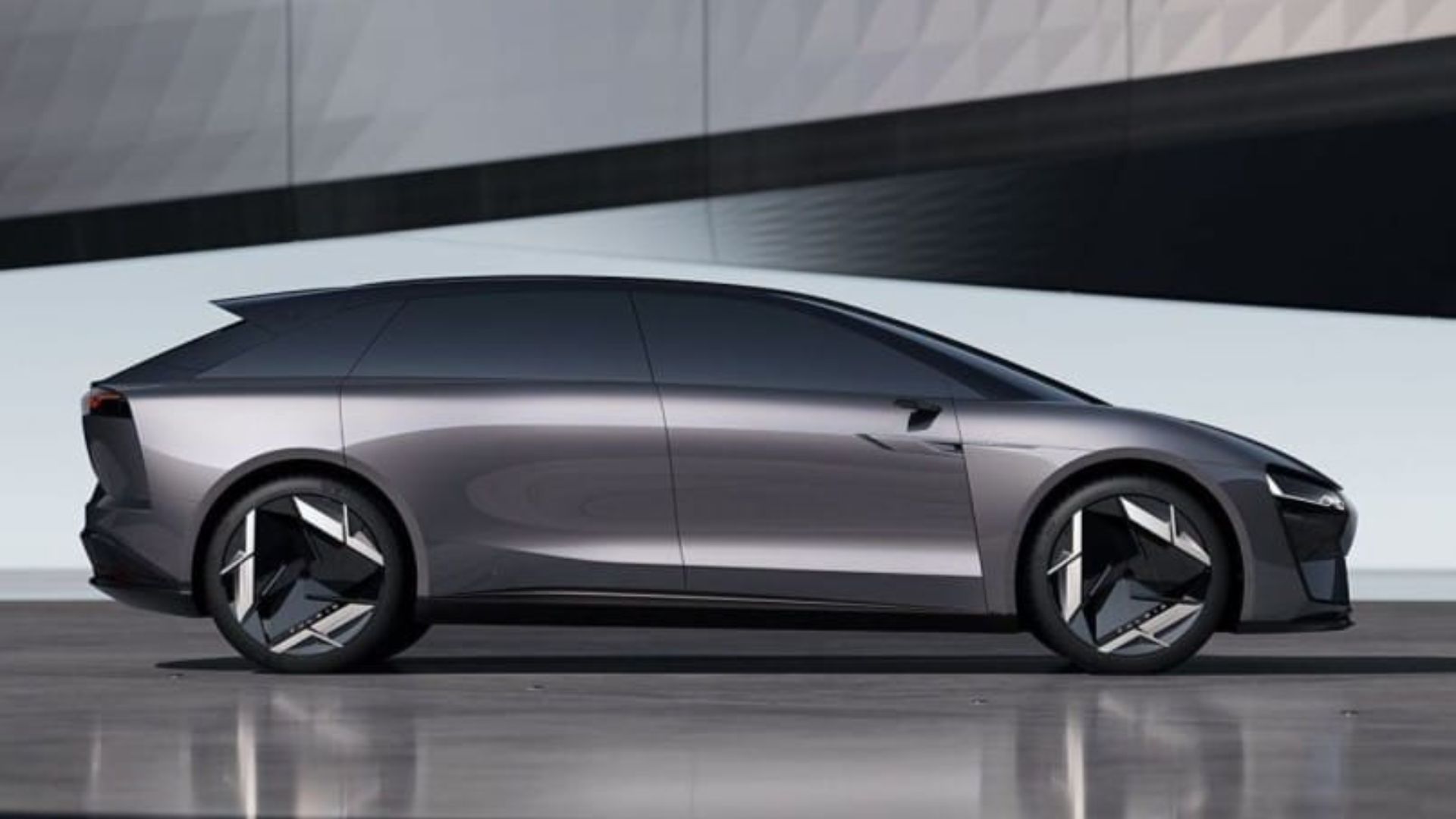
Chinese automaker Chery has already run a prototype.
It plans Technology Validation in 2026, then mass production in 2027.
Historically, solid-state battery timeline just keeps pushing back so I am conditioned to be cautious.
 interestingengineering.com
It plans Technology Validation in 2026, then mass production in 2027.
Historically, solid-state battery timeline just keeps pushing back so I am conditioned to be cautious.
Chery claims solid-state battery EV can hit 932 miles at minus 22°F
Chinese automaker Chery plans to debut its solid-state battery in the Exeed Liefeng EV this year, promising a 932-mile range even at -22°F.
interestingengineering.com

- Joined
- May 2, 2022
- Messages
- 2,493
- Reaction score
- 3,564
- Location
- Philadelphia, Pennsylvania
- Cars
- 2022 Air GT
- Air DE Number
- 0
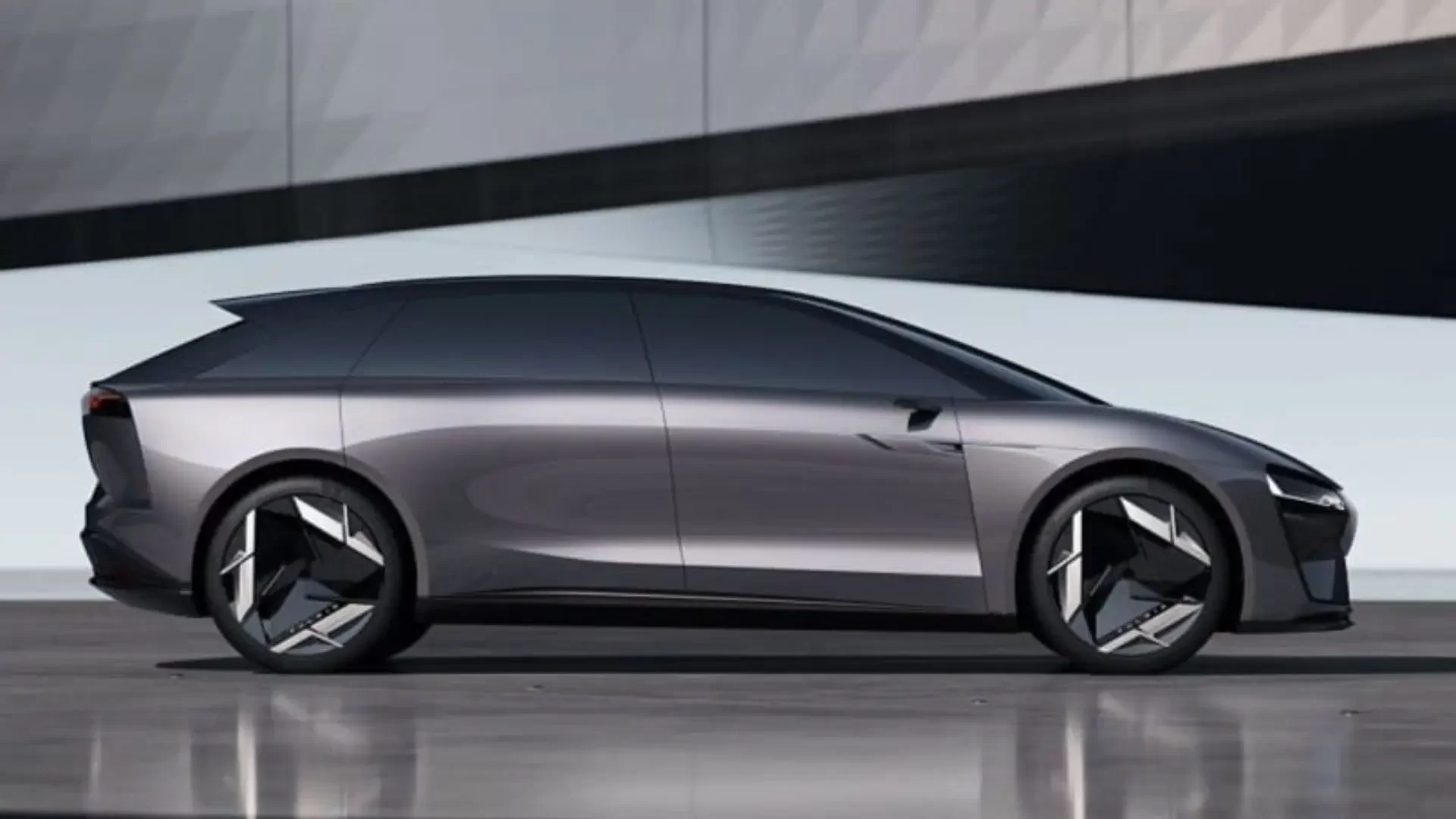
Oh I would buy a Shooting Brake: need I go to Canada ?
QuantumScape SSB's are trending much better IMO. VW backed, and commercial deployments into Ducati bikes as they scale into mass production with their patented ceramic coating.

- Joined
- May 7, 2025
- Messages
- 344
- Reaction score
- 627
- Cars
- GDE#257, MachE-GTP, MX
- Gravity DE Number
- 257
From what I understand, there are two design constraints sort of opposing each other:
* Short term rate of charge/discharge--dictates both acceleration and Regen braking. When combined with the size of the battery, this is Power Density.
* Amount of energy stored. Paired with size this is Energy Density.
* Conflating with both of these are the charging curve and expected lifetime
Supercapacitors tend to be great at Power Density. Various forms of liquid and solid state batteries can be made with high Energy Density, but the higher the Energy Density, typically the lower the Power Density.
Some have discussed using a supercapacitor as a buffer between the drivetrain and storage battery. Very high C rates both in and out for the energy stored in the supercap, refilled by both the battery and regen braking. Excess stored back to battery--both at a lower C rate.
* Short term rate of charge/discharge--dictates both acceleration and Regen braking. When combined with the size of the battery, this is Power Density.
* Amount of energy stored. Paired with size this is Energy Density.
* Conflating with both of these are the charging curve and expected lifetime
Supercapacitors tend to be great at Power Density. Various forms of liquid and solid state batteries can be made with high Energy Density, but the higher the Energy Density, typically the lower the Power Density.
Some have discussed using a supercapacitor as a buffer between the drivetrain and storage battery. Very high C rates both in and out for the energy stored in the supercap, refilled by both the battery and regen braking. Excess stored back to battery--both at a lower C rate.
- Joined
- Dec 3, 2022
- Messages
- 1,088
- Reaction score
- 735
- Location
- Visalia, CA
- Cars
- Lucid Air Grand Touring
- Referral Code
- ZAJRISAL
Here's an article on hype:
Technology Issues:
1. poor ionic conductivity of solid electrolytes
2. high impedance at the solid-solid interface.
Production issues:
1. ultra thin coatings
2. precise film formation
3. high-temperature processing without separators
The above alone would take years from now if production is ready today.
4. Costly: Five to ten times.

 kr-asia.com
Technology Issues:
1. poor ionic conductivity of solid electrolytes
2. high impedance at the solid-solid interface.
Production issues:
1. ultra thin coatings
2. precise film formation
3. high-temperature processing without separators
The above alone would take years from now if production is ready today.
4. Costly: Five to ten times.
Despite renewed hype, solid-state batteries remain years from mass production
Even as Chery, Sunwoda, and others announce new developments, the economics of solid-state batteries still have yet to add up.
kr-asia.com
That article is dedicated to reporting on the companies, people, and trends driving China's innovation economy. It's not a market perspective on SSB. Toyota is planning to commercialize them this year. https://www.toyota.ie/company/news/2021/solid-state-batteriesHere's an article on hype:
Technology Issues:
1. poor ionic conductivity of solid electrolytes
2. high impedance at the solid-solid interface.
Production issues:
1. ultra thin coatings
2. precise film formation
3. high-temperature processing without separators
The above alone would take years from now if production is ready today.
4. Costly: Five to ten times.
Despite renewed hype, solid-state batteries remain years from mass production
Even as Chery, Sunwoda, and others announce new developments, the economics of solid-state batteries still have yet to add up.

- Joined
- Jun 22, 2024
- Messages
- 1,520
- Reaction score
- 1,273
- Location
- Naperville, IL
- Cars
- 14 CR-V EXL, 26GravityGT
- Referral Code
- W772ZCOT
Especially with the new 1000V Native NACs with a CCS1 adaptor, or IONNA with 1000V CCS1, you have at least 5 years of everything getting better.My guess is you (and all of us) are fairly safe on that front. It is kind of like we see with the fact that on paper CCS1 has basically been superseded by NACS. Technically the war is over and NACS won. It is the dominant standard and your Gravity has it, yeah! In real life, CCS1 will continue to function just fine, and be easily available for use without an adapter for people like me with an Air for many years yet. Is NACS the future - yes. Is it better - yes. Does my CCS1 car have years of CCS1 life ahead of it. Sure.
- Joined
- Sep 17, 2025
- Messages
- 96
- Reaction score
- 64
It seems like Nordic Nano (the actual developer of the donut labs ssb) is likely a supercapacitor. I know little about this offshoot of ssb tech, but the legit concerns seem to be energy per volume and discharge. The verge motorcycle suggest that this is good based on the volume of the pack is not obviously larger than normal on motorcycles and the range is near double or more over most other emotorcycles. Does it discharge at a high rate when not supplying load, say overnight? Does it need a trickle charge to prevent this? Maybe not an issue at all?From what I understand, there are two design constraints sort of opposing each other:
* Short term rate of charge/discharge--dictates both acceleration and Regen braking. When combined with the size of the battery, this is Power Density.
* Amount of energy stored. Paired with size this is Energy Density.
* Conflating with both of these are the charging curve and expected lifetime
Supercapacitors tend to be great at Power Density. Various forms of liquid and solid state batteries can be made with high Energy Density, but the higher the Energy Density, typically the lower the Power Density.
Some have discussed using a supercapacitor as a buffer between the drivetrain and storage battery. Very high C rates both in and out for the energy stored in the supercap, refilled by both the battery and regen braking. Excess stored back to battery--both at a lower C rate.
Unlike all other true solid state tech, this is years ahead as it is in production at scale, not prototypes. To me, that is a big reason catl and China are freaking out as this could crush not only their battery industry, but also their rare earth metal stranglehold on the world if scalable production addition with the material composition is as easy and accurate as the Nordic nano patents demonstrate. No other semi or true ssb tech today can scale production because the tolerance issues haven’t been addressed well enough. So, this is bringing true ssb tech to market at scale this year whereas other tech is at least two years+ out, depending on how difficult/time consuming it will be to build the mass production facility.
IF Nordic nano tech is 3rd party verifiable/verge motorcycle analyzed, this could be in a nimble ev maker’s vehicle late this year if they were hell bent on adoption or 2027 at a measured fast pace transition because the supercapacitor design allows it to be dropped into any current ev electrical architecture.
QS is entering production this year…It seems like Nordic Nano (the actual developer of the donut labs ssb) is likely a supercapacitor. I know little about this offshoot of ssb tech, but the legit concerns seem to be energy per volume and discharge. The verge motorcycle suggest that this is good based on the volume of the pack is not obviously larger than normal on motorcycles and the range is near double or more over most other emotorcycles. Does it discharge at a high rate when not supplying load, say overnight? Does it need a trickle charge to prevent this? Maybe not an issue at all?
Unlike all other true solid state tech, this is years ahead as it is in production at scale, not prototypes. To me, that is a big reason catl and China are freaking out as this could crush not only their battery industry, but also their rare earth metal stranglehold on the world if scalable production addition with the material composition is as easy and accurate as the Nordic nano patents demonstrate. No other semi or true ssb tech today can scale production because the tolerance issues haven’t been addressed well enough. So, this is bringing true ssb tech to market at scale this year whereas other tech is at least two years+ out, depending on how difficult/time consuming it will be to build the mass production facility.
IF Nordic nano tech is 3rd party verifiable/verge motorcycle analyzed, this could be in a nimble ev maker’s vehicle late this year if they were hell bent on adoption or 2027 at a measured fast pace transition because the supercapacitor design allows it to be dropped into any current ev electrical architecture.
- Joined
- Sep 17, 2025
- Messages
- 96
- Reaction score
- 64
I hope you are right, nice if US doesn’t lose all ev related innovation. Though, it is still semi-solid state, so better than current tech, but not the performance of pure solid state. The analyst reports I have seen peg 2028 with the most positive one thinking 2027 for QS. This is when they view revs from production at scale to begin.QS is entering production this year…
- Joined
- Dec 3, 2022
- Messages
- 1,088
- Reaction score
- 735
- Location
- Visalia, CA
- Cars
- Lucid Air Grand Touring
- Referral Code
- ZAJRISAL
From what I understand, there are two design constraints sort of opposing each other:
* Short term rate of charge/discharge--dictates both acceleration and Regen braking. When combined with the size of the battery, this is Power Density.
* Amount of energy stored. Paired with size this is Energy Density.
* Conflating with both of these are the charging curve and expected lifetime
Supercapacitors tend to be great at Power Density. Various forms of liquid and solid state batteries can be made with high Energy Density, but the higher the Energy Density, typically the lower the Power Density.
Some have discussed using a supercapacitor as a buffer between the drivetrain and storage battery. Very high C rates both in and out for the energy stored in the supercap, refilled by both the battery and regen braking. Excess stored back to battery--both at a lower C rate.
Supercapacitor issues:
1. very low energy density
2. high self-discharge rate
3. High falling voltage during discharge
4. high cost
It's excellent for short-range, high-frequency bus routes. Quick flash charging while waiting for passengers to board and unboard.
No. 11 route in Shanghai, China, has been in operation since August 28, 2006 (for the past 20 years)
China has been willing to spend on infrastructure projects, but not sure about the rest of the world.
Demo in Serbia:
Last edited:

- Joined
- May 25, 2022
- Messages
- 475
- Reaction score
- 427
- Location
- Las Vegas, NV
- Cars
- 08 Dodge Challenger SRT
Turning 77 this year so I'll probably be one of the early adopters if/when SSB comes to fruition, BUT I will be selective in pulling the trigger. If it's Tesla, I'll probably pass; if it's Lucid or Toyota, it will definitely be a GO. My tough decision is if it's Mercedes-Benz. I may wait til Year 2 if it's them. Have owned 2, loved them both but they tend to need more care than Toyota. Based on sample size of one (me). YMMV

- Joined
- Jan 4, 2022
- Messages
- 5,616
- Reaction score
- 10,716
- Location
- Santa Clarita, CA
- Cars
- 2026 Gravity Dream
- Gravity DE Number
- 68
- Referral Code
- AWNJLGKT
If QS manages to kick off production this year then keep an eye on VW Group. They have a 26% stake in QSTurning 77 this year so I'll probably be one of the early adopters if/when SSB comes to fruition, BUT I will be selective in pulling the trigger. If it's Tesla, I'll probably pass; if it's Lucid or Toyota, it will definitely be a GO. My tough decision is if it's Mercedes-Benz. I may wait til Year 2 if it's them. Have owned 2, loved them both but they tend to need more care than Toyota. Based on sample size of one (me). YMMV
- Joined
- May 25, 2022
- Messages
- 475
- Reaction score
- 427
- Location
- Las Vegas, NV
- Cars
- 08 Dodge Challenger SRT
I'm afraid if I pull the trigger that my wife might pull the trigger. MBW (murder by wife) lol! That said, I'm really loving the Air Touring.
My experience with VW Group is that they can't get out of their own way.If QS manages to kick off production this year then keep an eye on VW Group. They have a 26% stake in QS
- Joined
- Jan 4, 2022
- Messages
- 5,616
- Reaction score
- 10,716
- Location
- Santa Clarita, CA
- Cars
- 2026 Gravity Dream
- Gravity DE Number
- 68
- Referral Code
- AWNJLGKT
Haha! Very true.My experience with VW Group is that they can't get out of their own way.
- Joined
- Sep 26, 2024
- Messages
- 63
- Reaction score
- 47
- Location
- Hartford, CT.
- Cars
- Lucid Air Grand Touring
Donut Labs has just released an independent report on their new battery. According to Donut Labs, the first independent test of the Donut Solid State Battery (see link), conducted by VTT Technical Research Centre of Finland, evaluates its charge performance under demanding conditions without active cooling. The cell was tested at both 5C and extreme 11C charge rates, confirming previously stated fast-charging targets, including a 0–80% charge in just 4.5 minutes at 11C. The results demonstrate exceptional charging capability alongside stable thermal behavior, providing verification of the battery’s high-power performance.
• VTT testing confirmed the Donut Battery charges from 0–80% in 4.5 minutes at 11C rates without active cooling
• The battery retained 98.4–99.6% of charged capacityafter rapid charging at extreme speeds
• No special compression or active cooling is required, simplifying battery pack design and reducing costs
• At 5C charging rates, the cell reached 100% in just over 12 minutes with full capacity available on discharge

 idonutbelieve.com
Every Monday, Donut Labs will release results of VTT's testing of its battery. If the independent testing confirms Donut Labs claims, this battery will revolutionize EVs.
• VTT testing confirmed the Donut Battery charges from 0–80% in 4.5 minutes at 11C rates without active cooling
• The battery retained 98.4–99.6% of charged capacityafter rapid charging at extreme speeds
• No special compression or active cooling is required, simplifying battery pack design and reducing costs
• At 5C charging rates, the cell reached 100% in just over 12 minutes with full capacity available on discharge
I Donut Believe - Presenting Third Party Results
The place where independent analysis of Donut Lab’s solid-state battery claims, with public test data, reports, and technical commentary is released.
idonutbelieve.com
Every Monday, Donut Labs will release results of VTT's testing of its battery. If the independent testing confirms Donut Labs claims, this battery will revolutionize EVs.