
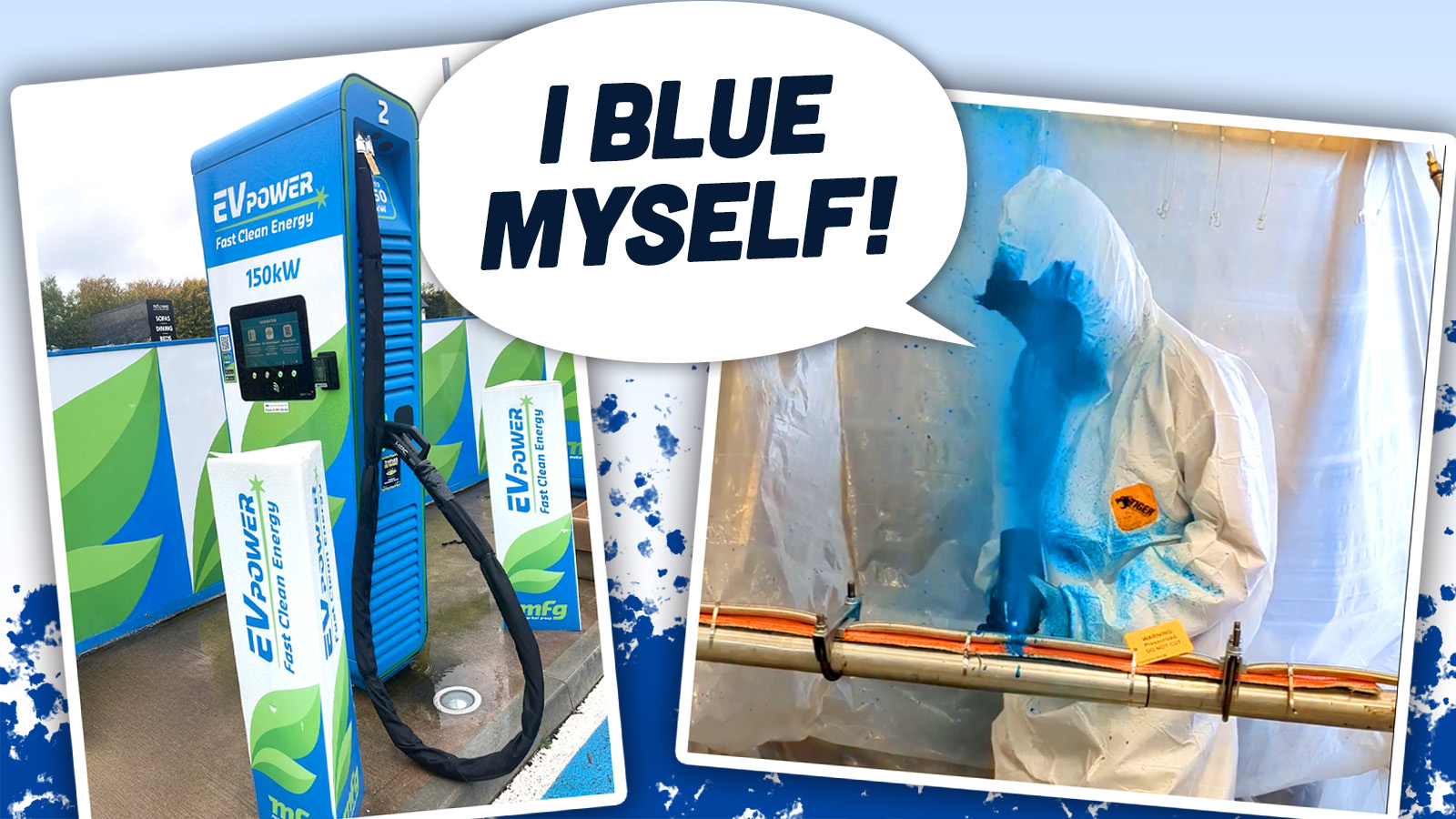
Thieves stealing EV cables for copper? Better think twice!

scal_air

Referral code - ZQOO2D7O Referrals Remaing 4

Verified Owner
Supporting Member
Joined
Apr 16, 2023
Messages
1,839
Reaction score
1,741
Location
Southern California
Referral Code
ZQOO2D7O
Finally, the karma for cable thieves/vandalizers arrives!
Some day, induction cables for wireless charging could be buried under the cement parking space. It would cost thieves a lot more to use heavy and noisy demolition and breaker hammer to dig up cables underground.
 
  • Haha
Reactions: das
Some day, induction cables for wireless charging could be buried under the cement parking space. It would cost thieves a lot more to use heavy and noisy demolition and breaker hammer to dig up cables underground.
I can see this for home L2 charging, where you may not care too much about how fast the car charges. But for L3 charging stations, the inefficiency of induction charging is likely to be a problem.
 
I can see this for home L2 charging, where you may not care too much about how fast the car charges. But for L3 charging stations, the inefficiency of induction charging is likely to be a problem.

Last year, in a research project, Porsche Taycan achieved the wirelessly charging speed of 270 kW with over 95% efficiency.


quick%20stats%20wireless%20charging%20world%20record.png


It happened in a lab. Now someone needs to commercialize it.
 
Last year, in a research project, Porsche Taycan achieved the wirelessly charging speed of 270 kW with over 95% efficiency.


quick%20stats%20wireless%20charging%20world%20record.png


It happened in a lab. Now someone needs to commercialize it.
Not that I'd turn this option down, but its all about cost. Cost to manufacture and install the charging station, plus the corresponding hardware in each car. I've no idea what it would be, but it seems like this cable is an effective modification to the existing infrastructure. The article says there have been no reports of this cable being stolen/vandalized, but they did not elaborate on its cost. Gotta think EA and other companies are looking into it though...
 
95% of 270 kW means 13 kW would need to be dissipated as heat which is crazy hot and would require a very decent amount of cooling (most likely liquid).
power loss per meter of 25 mm^2 would be approximately 83 watts per meter at 270 kW and 800 V, or ~160W per 2 meters (~6 feet), almost x100 times less.
 
This blog post suggests that the efficiencies are about equal....take it with a grain of salt

You are mixing Level 2 AC charging with DC fast charging,, not at all the same thing. I agree with the comments about 13kW of power being dissipated as heat being a very real problem.
 
What is the efficiency of a cable connection?

Wireless charging is roughly equivalent to Level 3 cable DC fast charging.

Here's a report of Tesla supercharging (telemetrics retrieved from teslafi.com) for 29 minutes to gain from 40% to 79% which used 38.1kWh from the shore just to add 34.25 kWh in the battery with a pretty decent efficiency number of 89.9%:


1764103723417.webp
 
I’d be a bit more concerned about that magnetic field and things like pacemakers and other medical devices.
 
I’d be a bit more concerned about that magnetic field and things like pacemakers and other medical devices.
Good issue for medical researchers on wireless higher charging.

There have been papers reported that there's no adverse effects for pacemakers from high-powered wired-charging but I've seen none written for powered wireless-charging.
 
Good issue for medical researchers on wireless higher charging.

There have been papers reported that there's no adverse effects for pacemakers from high-powered wired-charging but I've seen none written for powered wireless-charging.
You can easily shield a cable much easier than a coil that requires an exposed magnetic field
 
Back
Top