
- Joined
- May 19, 2025
- Messages
- 490
- Reaction score
- 631
- Cars
- BMW X1
I love station wagons and minivans, perhaps that shows how much I avoid trucks and SUVsI think that you and I might be the only people in the United States who like station wagons.

I love station wagons and minivans, perhaps that shows how much I avoid trucks and SUVsI think that you and I might be the only people in the United States who like station wagons.
I believe it was in the Wall Street Journal a few days ago. I discard the paper after I daily read it.Mind sharing the article? I'd like to give it a read

Maybe here, perhaps:I believe it was in the Wall Street Journal a few days ago. I discard the paper after I daily read it.

 carbuzz.com
On of the last times I read a paper on my commute (before switching to electronic) a child, walking the train with their parent, pointed at me as they went past and said quite loudly "look that nan is reading a paper". Quite a change from the early days when everyone was reading.I believe it was in the Wall Street Journal a few days ago. I discard the paper after I daily read it.

That's exactly the article I read.Maybe here, perhaps:
The Next Generation Of Car Lovers Are Turning Against SUVs In Favor Of Sedans
Good news for anyone sick of big, heavy, and thirsty crossovers.

@martinjlm aren't there also safety requirement differences between cars and trucks? IIRC the cars had more stringent safety requirements than trucks. Is this not the case?Part of the issue with sedans is availability. Ford currently has no sedans. GM has one (Cadillac CT5). Stellantis has one (Charger). The reasons these automakers went away from sedans has a bit to do with consumer shift to SUVs and CUVs. A lot of it has to do with quirks in the fuel economy regulations. Let me ‘splain…
For passenger vehicles, fuel economy is tiered based on the footprint or shadow area of the vehicle(s) being regulated. To simplify, consider the points where your tires touch the ground. That area under the car defines the shadow area or footprint. There is a fuel economy target for a given footprint. Larger footprint areas have slightly less stringent regulations than smaller footprint areas. More on that in a minute. That gets into why cars and trucks continue to get bigger. This is about why more SUV / CUV and less coupe / sedan.
Before I go too far down that alley please also consider that vehicles in the Truck Fleet have less stringent targets than vehicles in the Car Fleet. Words are capitalized in order to note when I’m talking about government classifications.
Now, let’s look at vehicles with same / similar shadow area. Ford Edge and Ford Fusion were built on similar platforms and have fairly close shadow areas. But the Fusion is a low roof (sedan) and Edge is a high roof (CUV). Because the high roof Edge can be categorized as a Truck for fuel economy and emissions regulations it has an easier target to meet than low roof Fusion. As a result, Ford would have a better shot at achieving portfolio average fuel economy regulations if they sell more Edge than Fusion. As a result, Fusion was killed off several years ago. Ironically, Edge was also recently killed off but there are other reasons for that. Another example would be Chevrolet Equinox and Chevrolet Malibu. Similar shadow areas, one (Equinox) is a high roof and tracks to Truck Fleet CAFE targets. The other (Malibu) was a low roof and tracked to Car Fleet CAFE Targets. Malibu is dead, Equinox is thriving. If Malibu was killed only because consumers don’t want sedans we would have to explain the popularity of Hyundai Elantra and Sonata, Kia K5, Honda Civic and Accord, Toyota Corolla and Camry, and on and on.
Now, let’s talk about why cars (and trucks) continue to get bigger. And let’s go back to the shadow area discussion. But let’s go back to about 2015 and look at Chevrolet Cruze, Chevrolet Malibu, and Chevrolet Impala. Small, medium, and large. Cruze had the most stringent CAFE targets. Then Malibu, then Impala. Cruze targets got to be so stringent that a heavy content load of technology would have been required to meet the targets. Technology that could not be supported by the price point of the vehicle. Buh-bye Cruze. Malibu could meet the slightly less stringent requirements with a little less technology, but still pricey. Impala had less stringent targets, but was also considerably heavier than Malibu and physics cannot be ignored. So, let’s take Malibu and extend the wheelbase (larger shadow area)to the point where it is almost the same shadow area as Impala, and nix Impala. Win-win. Don’t believe me? Park a 2024 Malibu next to a 2015 Impala. Almost the same size.
They were not cancelled, they were relaxed to a level where automakers have to do very little to actually achieve them. Thing is, vehicle development usually takes 3 - 5 years, so vehicles that start development assuming the current relaxed environment can be impacted by changes in regulation that occur with the inauguration of a new administration. Bush —> Obama —> Trump —> Biden —> Trump transitions all saw changes that impacted vehicle development. OEMs really would like to have a set of rules that just stick so that they can engineer to those regulations. Looks like the days of that happening are over.CAFE fuel economy penalties were cancelled last year. So while they killed the sedan, they no longer are. Of course nothing is permanent, and bringing new vehicles takes time so I don't expect much to change.
Absolutely not true. My first Product Planning job at an automaker was portfolio development of engines and transmissions as well as included technologies. For the most part the engines and transmissions used in cars are similar / same as those in light duty trucks, except for at the very low end (cars) and the very top end (trucks). Most of the volume is in the overlap and is designed for use in both cars and trucks. You cannot improve truck engines without improving car engines.American sedans died because the companies didn't want to spend the time and money to update the powertrains to meet efficiency standards. Meanwhile, Toyota spent the time and money to develop hybrids which means they could keep building sedans to sell in the 2nd largest car market. It also means that even if EV adoption slows in the US, they have vehicles to stuff (smaller) batteries into.
Unlike say, Ford, who is pivoting their battery plant into selling energy to AI data centers.
Super complicated. Willing to discuss with you offline but not gonna further disrupt this thread by trying to explain it. Super complicated.They were talking about changing the classification of car-based SUVs (Crossovers) from Light Truck category too.
Also super complicated. There are some Reg’s that apply to Cars that don’t apply to Trucks. And vice versa.@martinjlm aren't there also safety requirement differences between cars and trucks? IIRC the cars had more stringent safety requirements than trucks. Is this not the case?
Sedans might be coming back….for good reasonThe market for small sedans is getting smaller and smaller here in US. Americans are mostly buying SUV’s (small and big) as well as pickups. Smart decision for Lucid to focus on higher demand segments. The Japanese and Koreans dominate the low to mid price market and Germans dominate the mid to higher price market. These manufacturers have the benefit of having home markets that still want small cars to help justify continuing with small car development. US manufacturers have largely abandoned not only small cars but sedans in general.
But like you, I would love to see an AIr or Cosmos based convertible. My wife drives (mostly) a Mercedes E450 convertible that will need to be replaced in 4-5 years and would love if someone came up with a sport/luxury EV convertible to replace it.
not consumer shift, they wanted more profits by shoving overpriced SUV and Trucks up our faces. Just typical Detroit nonsense.Part of the issue with sedans is availability. Ford currently has no sedans. GM has one (Cadillac CT5). Stellantis has one (Charger). The reasons these automakers went away from sedans has a bit to do with consumer shift to SUVs and CUVs. A lot of it has to do with quirks in the fuel economy regulations. Let me ‘splain…
For passenger vehicles, fuel economy is tiered based on the footprint or shadow area of the vehicle(s) being regulated. To simplify, consider the points where your tires touch the ground. That area under the car defines the shadow area or footprint. There is a fuel economy target for a given footprint. Larger footprint areas have slightly less stringent regulations than smaller footprint areas. More on that in a minute. That gets into why cars and trucks continue to get bigger. This is about why more SUV / CUV and less coupe / sedan.
Before I go too far down that alley please also consider that vehicles in the Truck Fleet have less stringent targets than vehicles in the Car Fleet. Words are capitalized in order to note when I’m talking about government classifications.
Now, let’s look at vehicles with same / similar shadow area. Ford Edge and Ford Fusion were built on similar platforms and have fairly close shadow areas. But the Fusion is a low roof (sedan) and Edge is a high roof (CUV). Because the high roof Edge can be categorized as a Truck for fuel economy and emissions regulations it has an easier target to meet than low roof Fusion. As a result, Ford would have a better shot at achieving portfolio average fuel economy regulations if they sell more Edge than Fusion. As a result, Fusion was killed off several years ago. Ironically, Edge was also recently killed off but there are other reasons for that. Another example would be Chevrolet Equinox and Chevrolet Malibu. Similar shadow areas, one (Equinox) is a high roof and tracks to Truck Fleet CAFE targets. The other (Malibu) was a low roof and tracked to Car Fleet CAFE Targets. Malibu is dead, Equinox is thriving. If Malibu was killed only because consumers don’t want sedans we would have to explain the popularity of Hyundai Elantra and Sonata, Kia K5, Honda Civic and Accord, Toyota Corolla and Camry, and on and on.
Now, let’s talk about why cars (and trucks) continue to get bigger. And let’s go back to the shadow area discussion. But let’s go back to about 2015 and look at Chevrolet Cruze, Chevrolet Malibu, and Chevrolet Impala. Small, medium, and large. Cruze had the most stringent CAFE targets. Then Malibu, then Impala. Cruze targets got to be so stringent that a heavy content load of technology would have been required to meet the targets. Technology that could not be supported by the price point of the vehicle. Buh-bye Cruze. Malibu could meet the slightly less stringent requirements with a little less technology, but still pricey. Impala had less stringent targets, but was also considerably heavier than Malibu and physics cannot be ignored. So, let’s take Malibu and extend the wheelbase (larger shadow area)to the point where it is almost the same shadow area as Impala, and nix Impala. Win-win. Don’t believe me? Park a 2024 Malibu next to a 2015 Impala. Almost the same size.
Very well written, insightful post. Thank you.Part of the issue with sedans is availability. Ford currently has no sedans. GM has one (Cadillac CT5). Stellantis has one (Charger). The reasons these automakers went away from sedans has a bit to do with consumer shift to SUVs and CUVs. A lot of it has to do with quirks in the fuel economy regulations. Let me ‘splain…
For passenger vehicles, fuel economy is tiered based on the footprint or shadow area of the vehicle(s) being regulated. To simplify, consider the points where your tires touch the ground. That area under the car defines the shadow area or footprint. There is a fuel economy target for a given footprint. Larger footprint areas have slightly less stringent regulations than smaller footprint areas. More on that in a minute. That gets into why cars and trucks continue to get bigger. This is about why more SUV / CUV and less coupe / sedan.
Before I go too far down that alley please also consider that vehicles in the Truck Fleet have less stringent targets than vehicles in the Car Fleet. Words are capitalized in order to note when I’m talking about government classifications.
Now, let’s look at vehicles with same / similar shadow area. Ford Edge and Ford Fusion were built on similar platforms and have fairly close shadow areas. But the Fusion is a low roof (sedan) and Edge is a high roof (CUV). Because the high roof Edge can be categorized as a Truck for fuel economy and emissions regulations it has an easier target to meet than low roof Fusion. As a result, Ford would have a better shot at achieving portfolio average fuel economy regulations if they sell more Edge than Fusion. As a result, Fusion was killed off several years ago. Ironically, Edge was also recently killed off but there are other reasons for that. Another example would be Chevrolet Equinox and Chevrolet Malibu. Similar shadow areas, one (Equinox) is a high roof and tracks to Truck Fleet CAFE targets. The other (Malibu) was a low roof and tracked to Car Fleet CAFE Targets. Malibu is dead, Equinox is thriving. If Malibu was killed only because consumers don’t want sedans we would have to explain the popularity of Hyundai Elantra and Sonata, Kia K5, Honda Civic and Accord, Toyota Corolla and Camry, and on and on.
Now, let’s talk about why cars (and trucks) continue to get bigger. And let’s go back to the shadow area discussion. But let’s go back to about 2015 and look at Chevrolet Cruze, Chevrolet Malibu, and Chevrolet Impala. Small, medium, and large. Cruze had the most stringent CAFE targets. Then Malibu, then Impala. Cruze targets got to be so stringent that a heavy content load of technology would have been required to meet the targets. Technology that could not be supported by the price point of the vehicle. Buh-bye Cruze. Malibu could meet the slightly less stringent requirements with a little less technology, but still pricey. Impala had less stringent targets, but was also considerably heavier than Malibu and physics cannot be ignored. So, let’s take Malibu and extend the wheelbase (larger shadow area)to the point where it is almost the same shadow area as Impala, and nix Impala. Win-win. Don’t believe me? Park a 2024 Malibu next to a 2015 Impala. Almost the same size.

Not exactly what I was thinking of.
Lots of well-informed information in these posts.Also super complicated. There are some Reg’s that apply to Cars that don’t apply to Trucks. And vice versa.
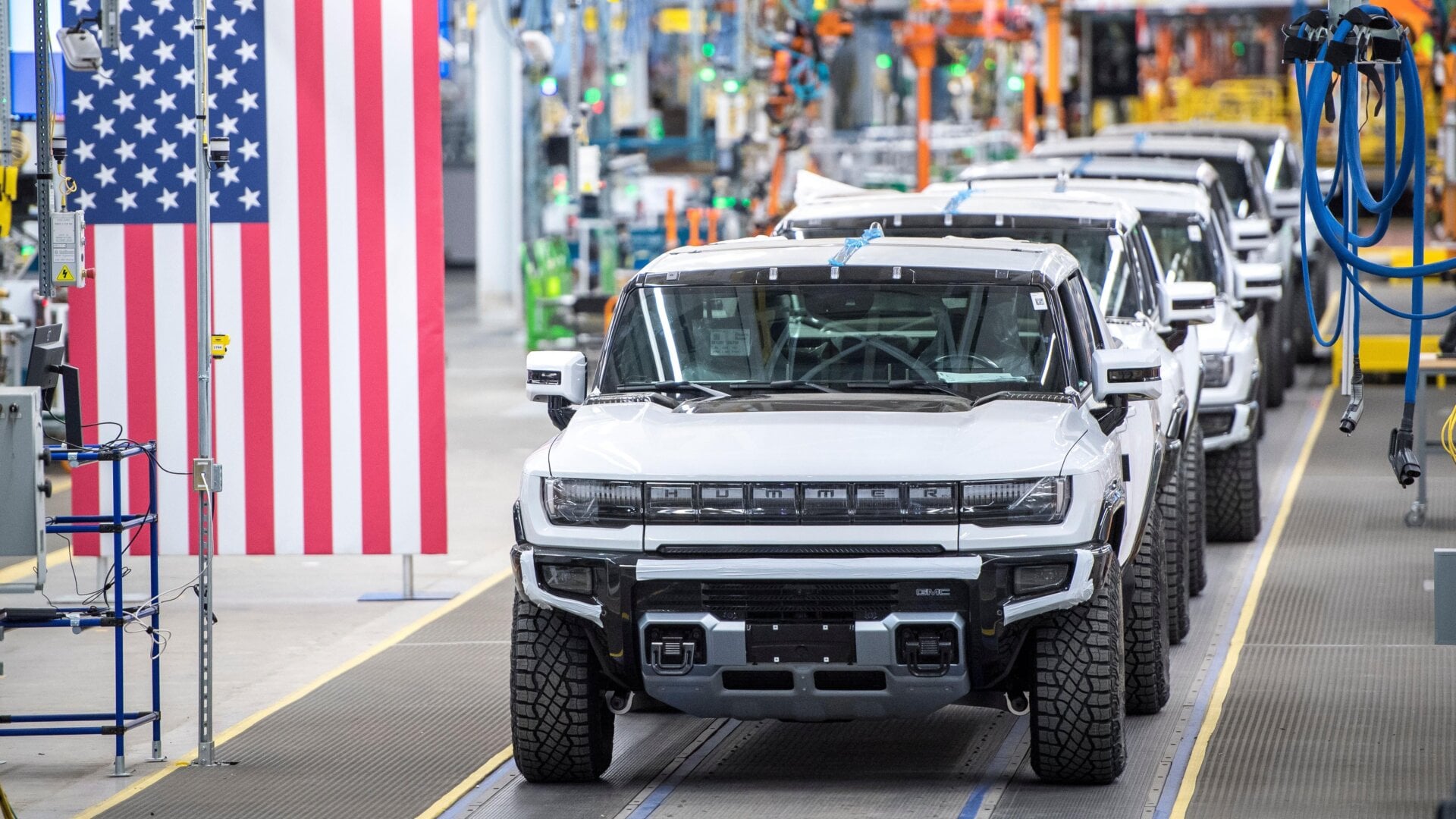
 gizmodo.com
Perfect example of government manipulation having unintended consequences.Now, let’s look at vehicles with same / similar shadow area. Ford Edge and Ford Fusion were built on similar platforms and have fairly close shadow areas. But the Fusion is a low roof (sedan) and Edge is a high roof (CUV). Because the high roof Edge can be categorized as a Truck for fuel economy and emissions regulations it has an easier target to meet than low roof Fusion. As a result, Ford would have a better shot at achieving portfolio average fuel economy regulations if they sell more Edge than Fusion. As a result, Fusion was killed off several years ago. Ironically, Edge was also recently killed off but there are other reasons for that. Another example would be Chevrolet Equinox and Chevrolet Malibu. Similar shadow areas, one (Equinox) is a high roof and tracks to Truck Fleet CAFE targets. The other (Malibu) was a low roof and tracked to Car Fleet CAFE Targets. Malibu is dead, Equinox is thriving. If Malibu was killed only because consumers don’t want sedans we would have to explain the popularity of Hyundai Elantra and Sonata, Kia K5, Honda Civic and Accord, Toyota Corolla and Camry, and on and on.
Yeah, there's a long list of reasons why new cars sales are shrinking (at least lately). Price is obviously a biggie. Like so many things this decade, price is way up and not as many people can afford it. (Even more so: auto insurance.)Lots of well-informed information in these posts.
Not to linger too long off-topic, but some more explanations and lots of links worth following here regarding the future state of automobiles in the US.
As 1 Million New Car Buyers Vanish From U.S. Economy, a New Car Increasingly Becomes a Distant Dream
Buying a new car—any new car—is increasingly a baller move, rather than something Americans can expect to do.